A Guide to Sourdough Starter

This post is about making and maintaining a sourdough starter. Mainly aiming for newbies (like myself 10 years ago) and anyone who is interested in natural levain. FAQ should answer most of the question but feel free to send in more via comments.
This is not the only way to make, maintain, use a sourdough starter! This is my practice and what I have fine tuned over the years and has given me great results consistently.
Lets get some basic things straightened up first:
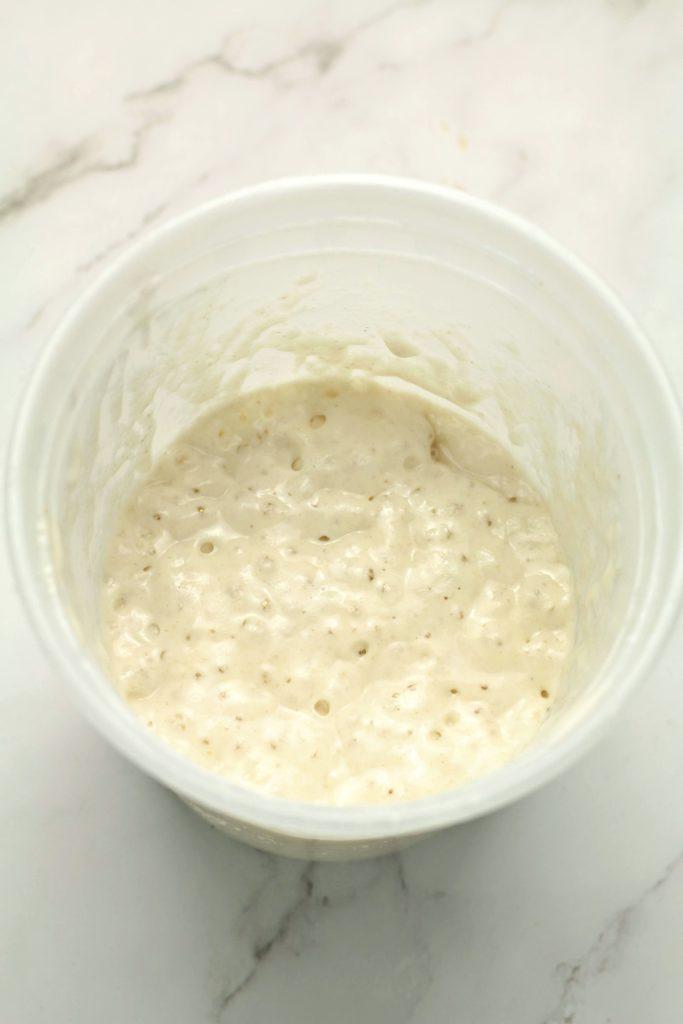
What is a sourdough starter: A starter also referred to as a culture/levain, is a mixture of flour, water, yeast and other bacteria (eg: lactobacilli). It is in reality a collection of several micro-organism. Yeast should be the prominent organism, because that is what we need to rise bread!
Starters can be very different to one another depending on the location, feeding ratio and frequency, the flour or flour combination used. Some like to maintain a Rye starter. Some prefer a stiff (50% water) starter (pasta madre). If you make gluten free bread or pancakes, you might want a gluten free starter. Whats common to all these starters is that they contain yeast or as we call it Natural Yeast.
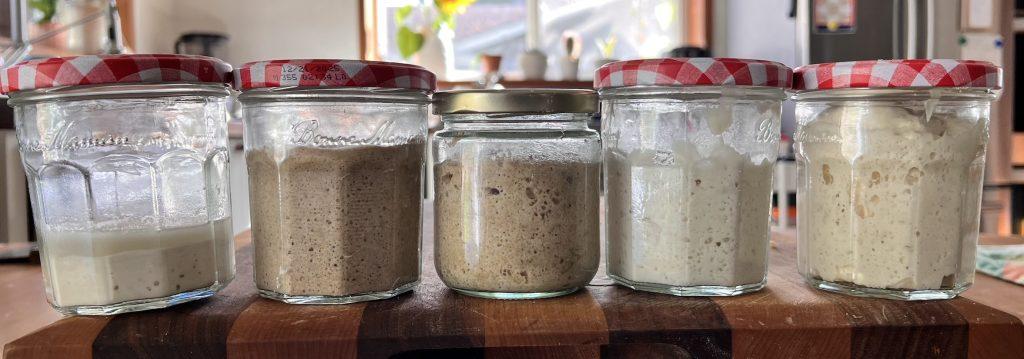
What is yeast: A microscopic single-cell organisms. While there are many sub species, the bakers yeast is identified by the scientific name Saccharomyces cerevisiae. Yeast is present in the air, on many surfaces, on tree barks, fruit skin and so forth. Yeast can also be grown in a laboratory.
How does yeast help make bread: Yeast, when provided with flour, water and air, start to reproduce. Flour is broken down in to simple sugars by enzymes in the flour. The yeast consume these sugars and reproduce releasing CO2 (carbon dioxide) and ethyl alcohol as by-products. CO2 is the gas that helps bread rise. A perfectly risen bread has the light and airy crumb that we love. Without yeast, the dough will be dense, hard, flat and not enjoyable.
Commercial yeast vs natural yeast(sourdough starter): Commercial yeast is nothing but the same single-cell organism that is isolated and grown on a medium in a controlled environment. This medium is then dehydrated and packaged for sale and distribution. Commercially produced yeast gives speed and reliability when it comes to proofing bread products. Natural yeast, however is slow, because the starter/culture has a less concentration of yeast and it is mostly flour and water. Hence it takes a long time to proof bread dough.
This long time gives lactobacilli (another bacteria naturally occurring in starter and in flour) ample time to grow and colonize. The lactobacilli consumes the sugars and some of the protein in flour (gluten) and releases lactic acid as a by product, which gives sour-dough, well, the sour flavor.
This is a very basic simple explanation. But if you are curious, internet is flooded with information. With that in mind lets see the process of making a starter from the scratch. It is easy, you just need patience and consistency. There are various ways to make a starter but this is what I have followed and seen success. This is a 100% hydrated starter (meaning there is 1:1 or equal parts of flour and water by weight)
Making your own starter
Nest question will be....how long can it stay in the fridge and how do we use it again? Keep reading to find the answer and my go to method!
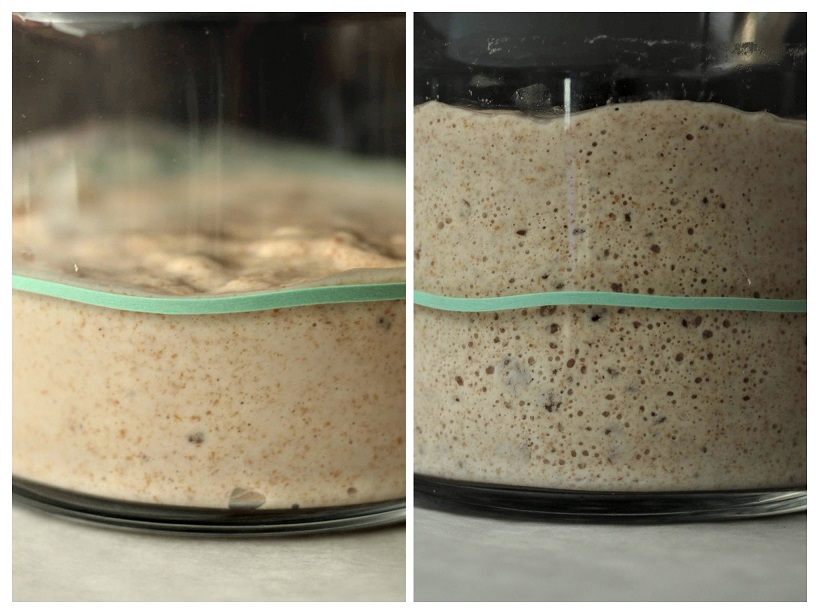
Mature starter
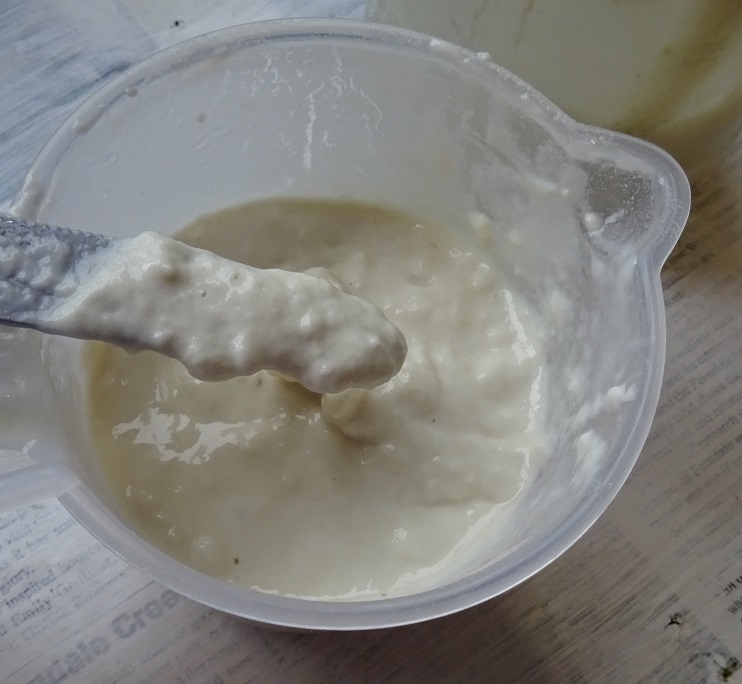
A mature active starter is the key to great bread! A well maintained starter will mature faster. A mature starter has a high concentration of yeast (or it is saturated with yeast).
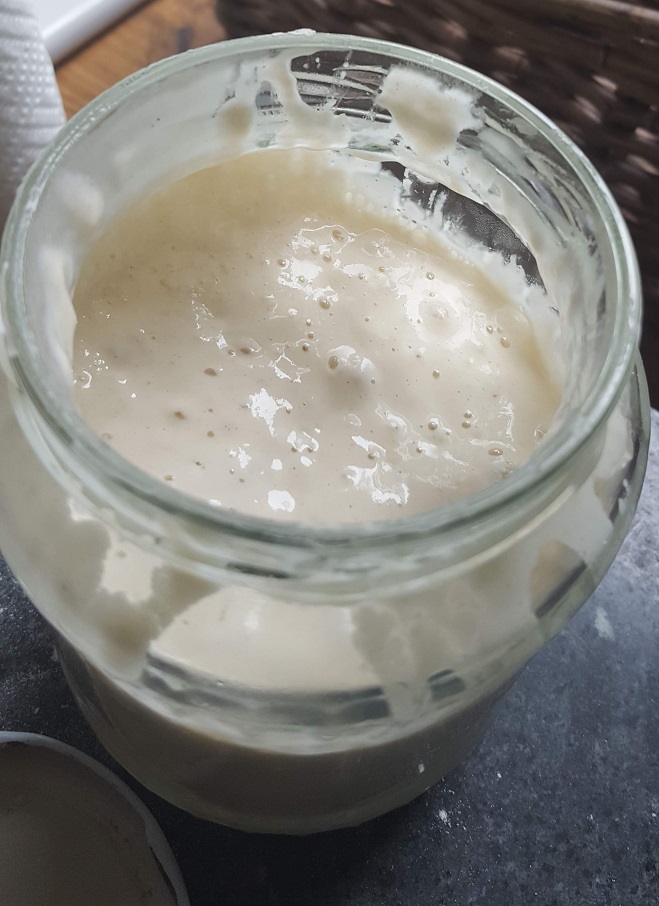
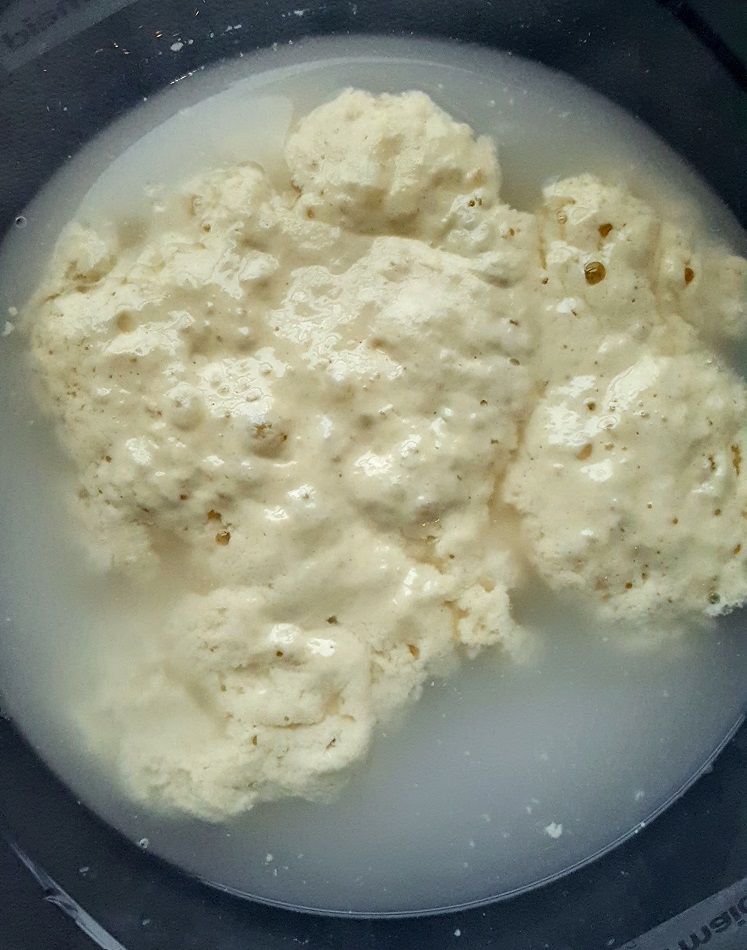
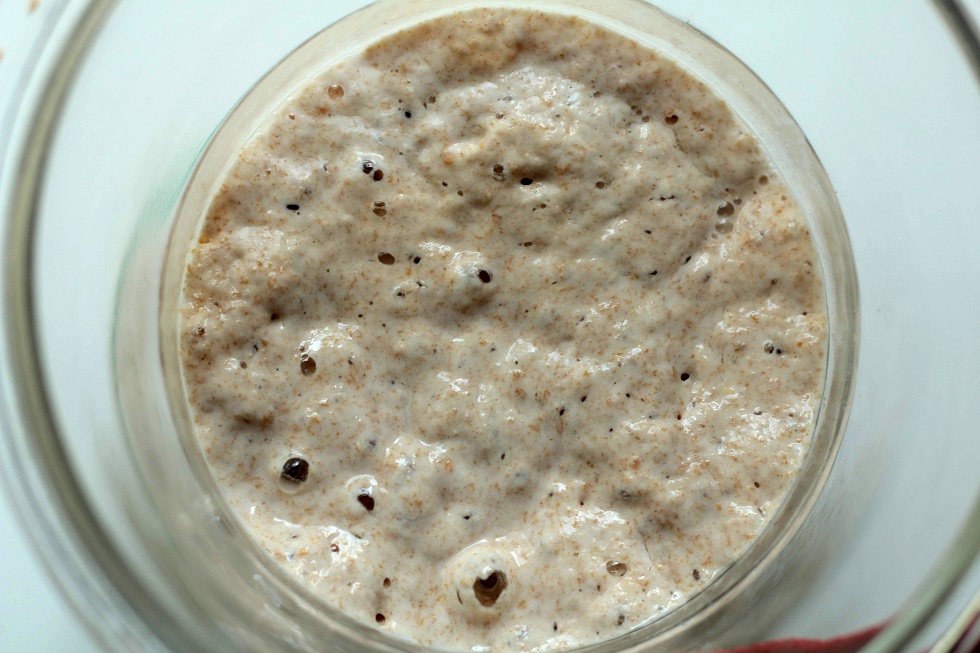
A healthy 100% hydrated mature starter looks like a sponge. It is airy, light and fluffy. When you gently, fold it with a spoon, you will hear the bubbles pop. Another good indication is, that when you pour the sponge like starter into a bowl of water, it will float like a cloud. Pic_4. This is because of all the gases from the yeast growth/fermentation.
Technical vs Practical
Technically speaking The best time to use a starter is when it is in peak maturity or better yet, just before it reaches it's peak. How do we know if it is at its peak. Some would say, wait for the starter to stop growing any further (that is the peak) and use it as soon as it starts to deflate.
Now, if you want and have got time, you can map your starter growth, and use the chart to get the exact hour that it reaches it's peak. But keep in mind, starters have got a mind of their own, so you'll have to re-do this chart periodically for maximum accuracy. Also the growth depends on temperature too. So you'll have to keep all the affecting factors like room temperature, flour, water temperature, feeding ratio, flour quality, flour type, water quality the same. This is not practical and I don't recommend doing this unless you are doing it for fun.
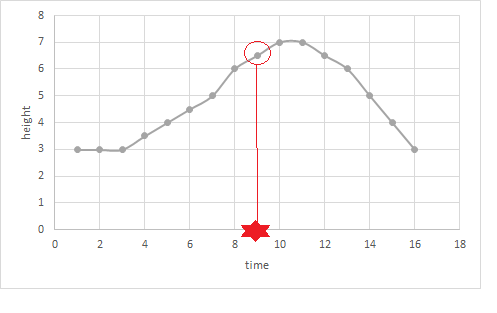
Chart shows the starter growth and decline
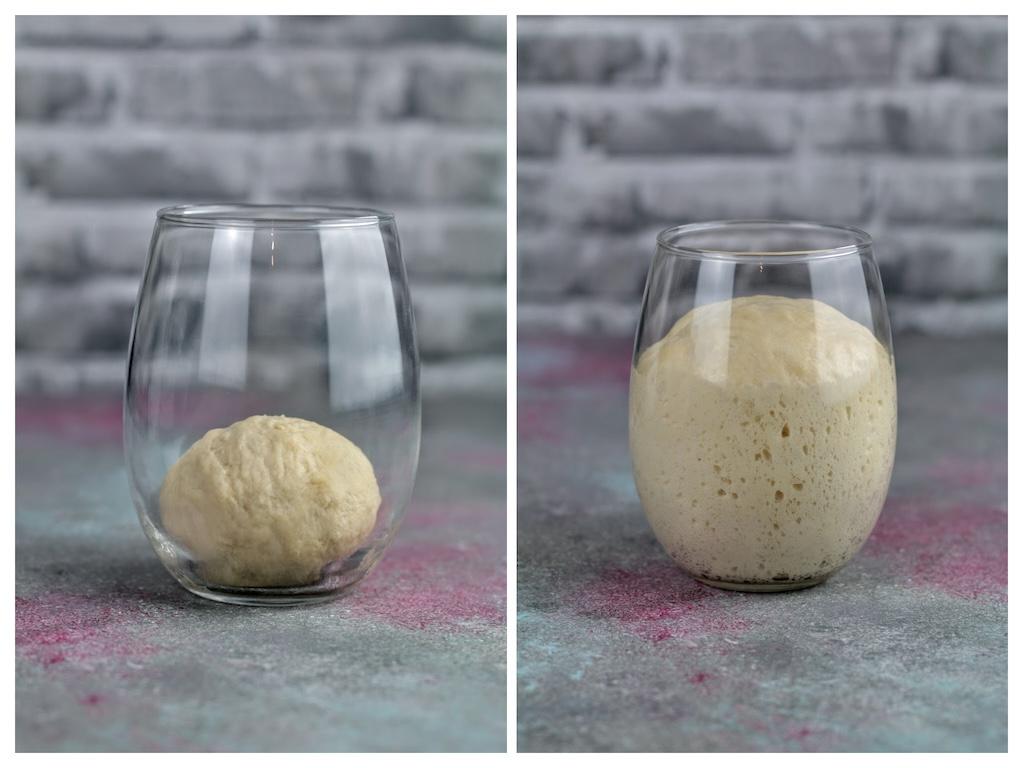
Practically however, you can use the starter(assuming it is 100% hydrated) as soon as it doubles. If you are a beginner, mark the original height and when it roughly doubles (in height) it is good for making bread. This is what I did. With practise you will know when it is ready even without looking at the height. When you know what a ripe or mature starter/levain looks like it becomes easier and you will use your judgment and instinct.
Feeding Ratio
There is no one ratio that fits every scenario. But, I will discuss the pros and cons of different ratios and you can pick the ratio that better suits your schedule. My go to maintenance feeding ratio is roughly 1:5:5 (it can be 1:6:6 or 1:4:4) and I never weigh my starter flour or water when feeding. May be weight the first time and remember what it looked like. This makes your life a lot easier but if you want to go ahead and weigh everything. A 1:5:5 starter at room temperature(70F) will be ready (double in height) in 4-5 hours. the rule is you should feed it with more food that culture. So 1:1:1 is not considered a good ratio for maintenance. But if you wan to multiply/expand your starter quickly 1:1:1 is a good ratio as your starter will be ready in about 1 hour. If you feed at 1:10:10, it is still fine but it will take longer to mature. This is a good ratio to mature a start overnight so it is ready for morning bread baking.
How often to feed ? I recommend at least twice a week for a healthy starter. Even if you are not making bread, pull the refrigerated starter out, let it mature and feed it at 1:5:5 and place it back in the fridge. A well maintained starter will mature faster because it has a healthy amount of yeast. If you don' feed you starter regularly (at least once a week) and it stays in the fridge for too long, then chances are most of the yeast is dead and so it will mature very slowly.
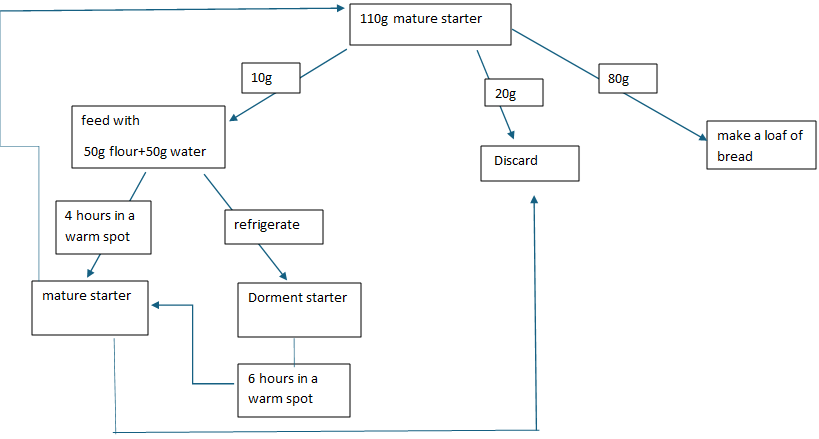
How to use a refrigerated starter to make bread? Pull the starter out and let it sit in a warm place to activate. If your starter matures in 3-4 hours then it is healthy and you can use some of it to make bread and feed the remaining and refrigerate.
If your starter didn't show good signs of maturity in 3-4 hours(this happens if you have neglected the starter) or if you aren't satisfied with the look, then take about 10-20g (discard the rest) and feed that at 1:5:5 ratio. If this matures within 4 hours in a warm place then you can use some of it to make bread, feed the remainder and refrigerate! Or repeat the process until you get active starter.
FAQ
Can I save/use the discard?
Yes. You don't have to throw away the discard. When you feed the starter, you can save a tablespoon (or whatever the amount you are feeding) and store the rest in the refrigerator in a sealed plastic/glass container (non-reactive). You can then use the saved discard, in other recipes to replace of some of the flour and moisture of that recipe. I use these discard to make crackers, pancakes, waffles, flat bread, scones etc. Check my recipes here.
The old discard won't be as active and it would mostly be just not-so-active starter (flour+water) so you cannot expect it to work as a levain. But discard adds flavor to recipes as it is acidic than regular starter.
Can I recover a neglected starter?
Probably you can. This depends on the time the starter had been neglected for and the fact that it was left in the refrigerator or not. In the fridge, it may be possible leave a starter for up to two months and still recover it. there are cases like that and personally, I have only left it for a month only. I was able recover it, of course. But if a starter is left at room temperature, it probably won't survive as long. This is because, other bacteria are going to take over as the yeast dies and the starter will go bad rapidly.
You can tell if a starter has gone bad it it has a foul smell or green/blue/gray/red spots. In these cases, it's best to throw it out and start afresh.
If the starter was in the refrigerator, it will probably be in a dormant state and there might still be some live(active) yeast cells left. Your will probably see a layer of liquid on top (light grayish) and it will smell like strong vinegar or acid. What you can do is, discard the gray water and scoop a tiny bit starter from the very bottom and feed it 1:5:5 back to back until you see activity. Make sure to leave it at room temperature. keep an eye on the activity level. If this didn't show any sign of activity after 8-10 hours after feeding then probably it is better to start from the beginning. Or get some from a friend :)
How to refresh a chilled starter ?
If you keep your starter in the refrigerator when you don't use it, then this is how you refresh it;
- get the starter out from the fridge and let it sit at room temperature(or in a warm place) until you see some activity ( I leave it for 2-3 hours)
- if you feed regularly you will see strong activity and you can use this starter to make bread
- if not take a table spoon and discard the rest. feed this tablespoon of starter at 1:5:5 and leave in a warm spot until it is mature. Then use some to make bread (or not) and feed 10-20g. The fed starter can now go back in the fridge!
To add Rye or not to add Rye?
Rye flour has more amylase the enzyme that breaks down flour into sugar. So if your starter is slow, you can add a pinch of Rye to it. The rye will help break down flour so more sugar is available for the yeast!
What flour to use?
You can use any flour. But the best is either all purpose or white bread flour. If you make Rye bread and you want it to be 100% rye, then you can maintain a rye starter. Using whole wheat, spelt is not recommended for beginner bakers as it can be challenging to read your starter. Also gluten free flour starters are difficult to read as there is no gluten to trap the gases.
I use all purpose flour to feed/refresh my starter and I use this starter to make rye, whole wheat bread.
Hydration of the starter?
Typical starters you see everyday are 100% hydrated. That means they have 1:1 flour:water. This gives the best consistency to trap the gases so we can actually see when it is active and ready.
eg:
10g starter: 50g flour: 50g water - 100% hydrated
10g starter: 50g flour: 40g water - 80% hydrated
10g starter: 50g flour: 25g water - 50% hydrated (stiff starter)
A Guide to Sourdough Starter
Ingredients
Method
- 1
See original recipe
Never Miss a Recipe
Get new recipes straight to your inbox.



Comments
Loading comments…