Rye, Molasses and Orange Sourdough

This sourdough has 40% Gazelle Rye. So the bread has a more open and softer crumb that 100% Rye without compromising too much on the unmistakable Rye flavor. This is a good bread if you like Rye but still love a softer, chewy crumb.
It is common to see molasses, dry malt, dark malt extract in Rye breads and in this case, I am going in with molasses. Molasses gives the bread a nice dark color and a subtle caramel note. This bread is closer to Nordic Rye breads with the addition of Orange zest. Rye bread usually reminds me of the many various bread I tasted while working briefly in Sweden.
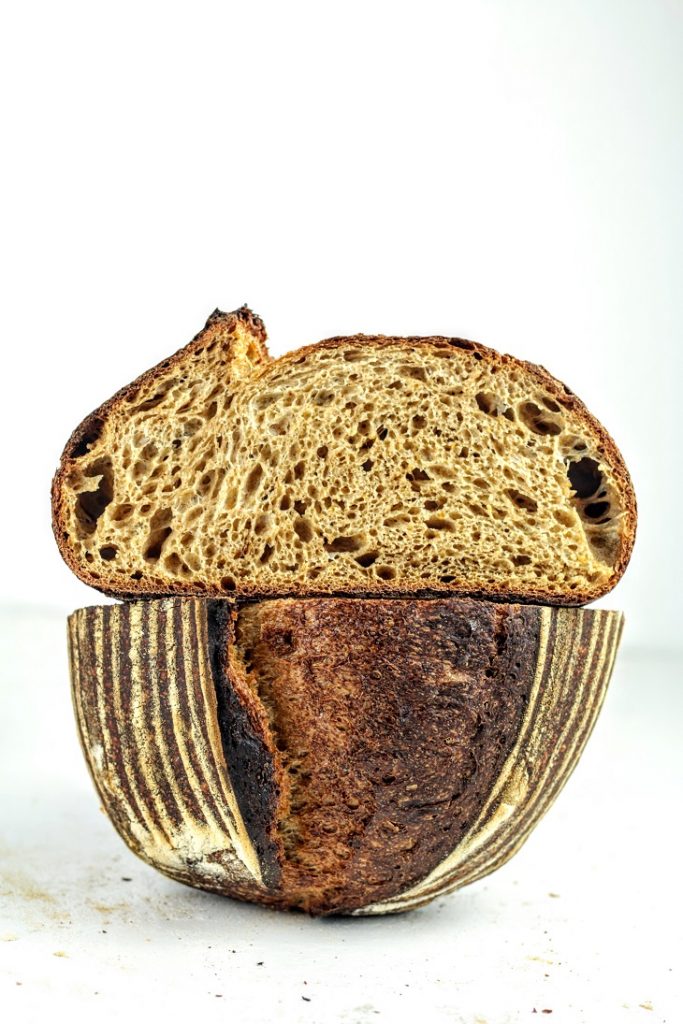
A bit about Rye:Rye is a grass that is closely related to wheat and barley. Rye is high in fiber, copper, magnesium, and several other essential nutrients. Rye flour is higher in gliadin but low in glutenin, the two proteins that bind together to form "gluten". Hence, even though the flour is not considerably lower in total protein content, it is significantly lower in gluten which is the protein responsible for strengthening a dough. Due to this reason, bread made with 100% Rye tend to be denser with a close crumb. But nonetheless, the bread tastes very good and is super nutritious. So if you wan to make much softer bread with a fairly open crumb, you will have to mix regular bread flour ( white wheat flour) with Rye. Rye is not only for bread, you can use it in cookies, biscuits, pancakes and in pretty much anything that you make with flour. The % of Rye you use in a recipe will affect the texture,color and taste in the end product. A good one to experiment with. Apart from baked goodies, Rye is also used in making alcohol. A part of the wheat/barley is replaced with Rye to give the beer or the whiskey a spicy, nutty tone.The whole grain Gazelle Rye I am using today for this recipe is a spring verity, meaning it is planted in the spring and then harvested in the summer and fall.
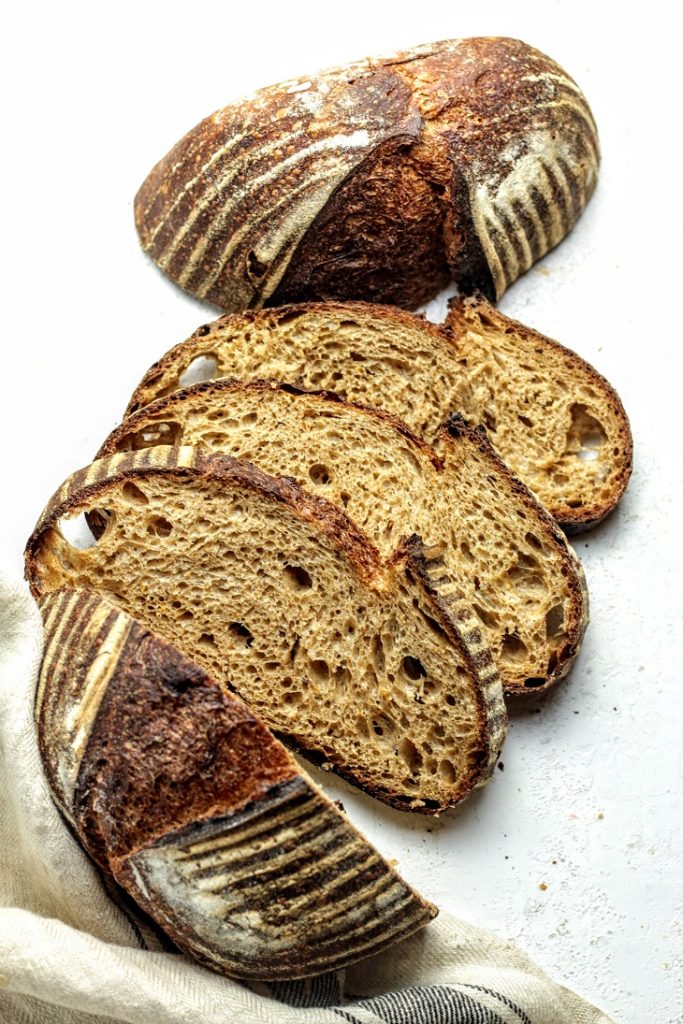
Other than the use of different ingredients, the process of making this bread is very similar to any other sourdough. But I will go through each and every step with pictures as usual, so even if this is the only bread you bake out of my blog, you'll still be taken care of :)
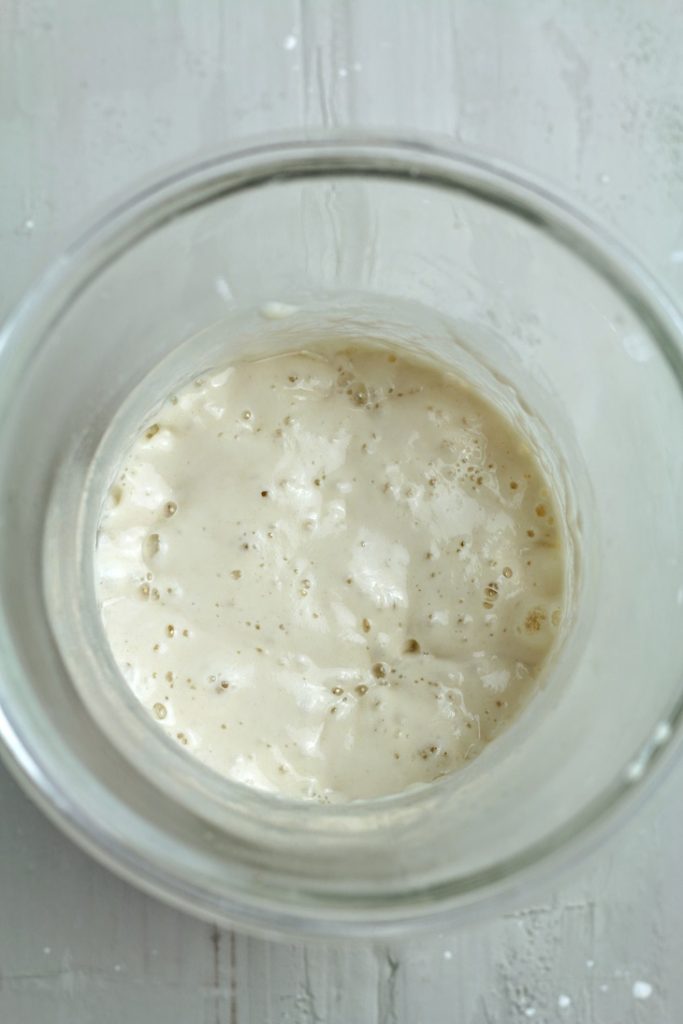
Refresh and feed your starter and have it ready. To know more about feeding your starter follow this link. If you are new to bread making or sourdough, then this post will save you from a lot of trouble.
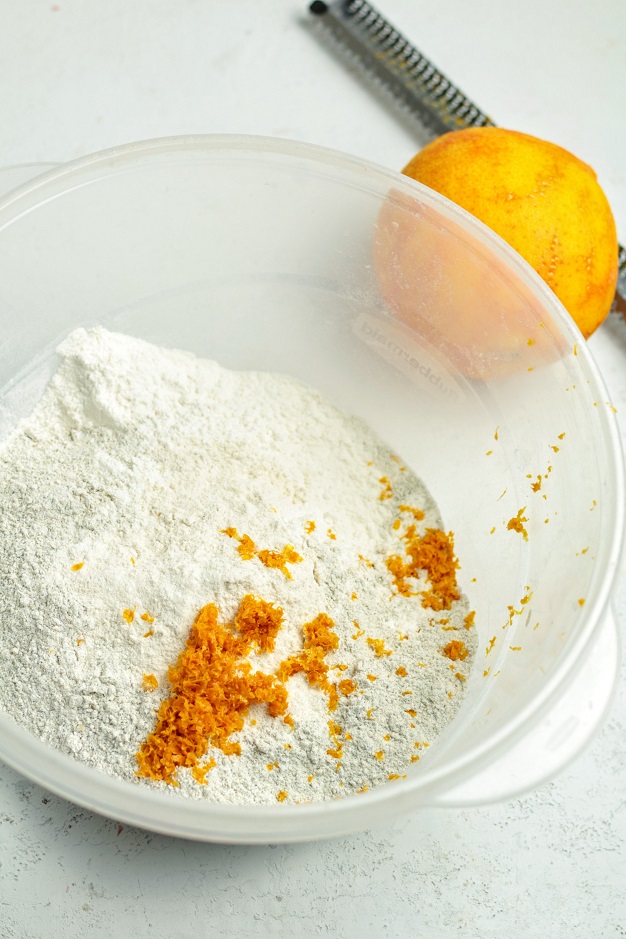
Place the flour in a big bowl and add the grated Orange zest.
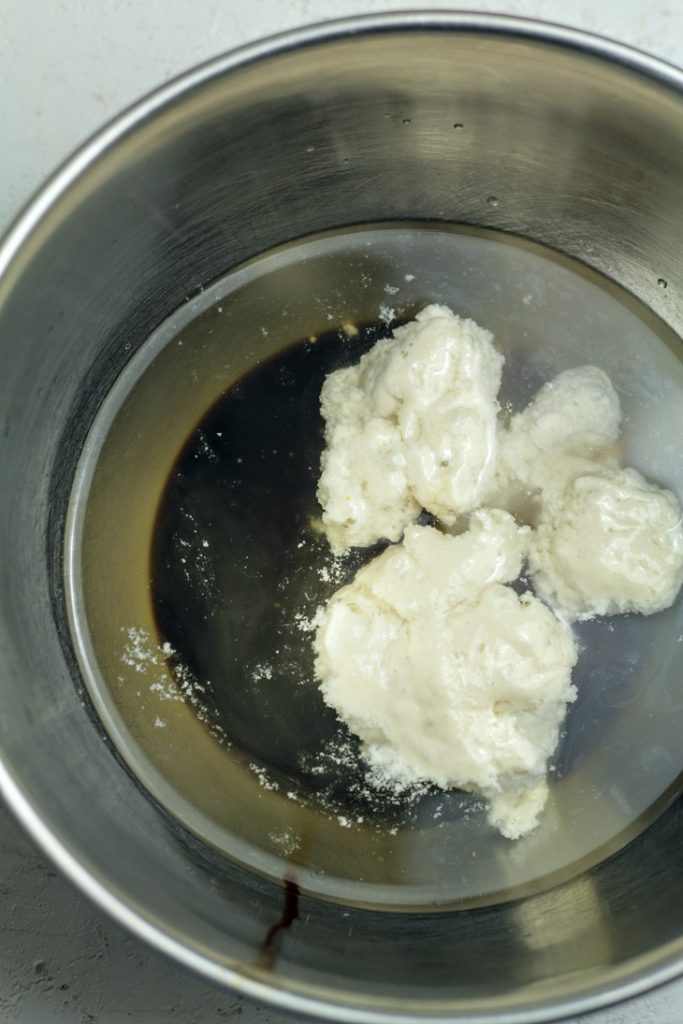
Weigh the water, molasses and starter in another bowl. Give this a good mix before adding to the flour mix
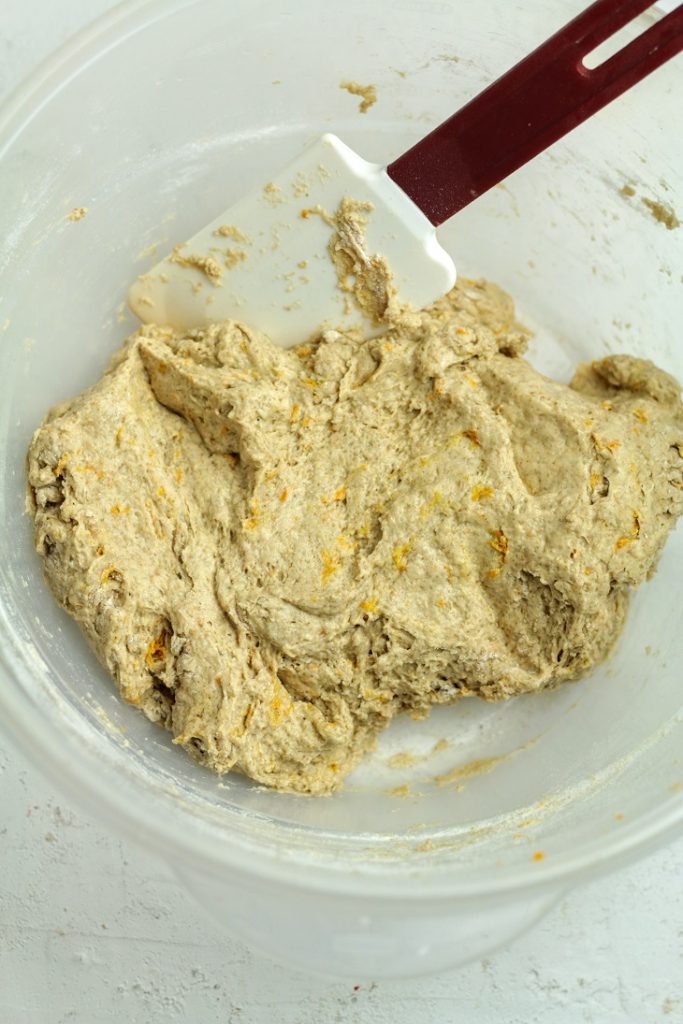
Mix the flour and the water from above, until everything is hydrated. Close and leave this to autolyse for an hour
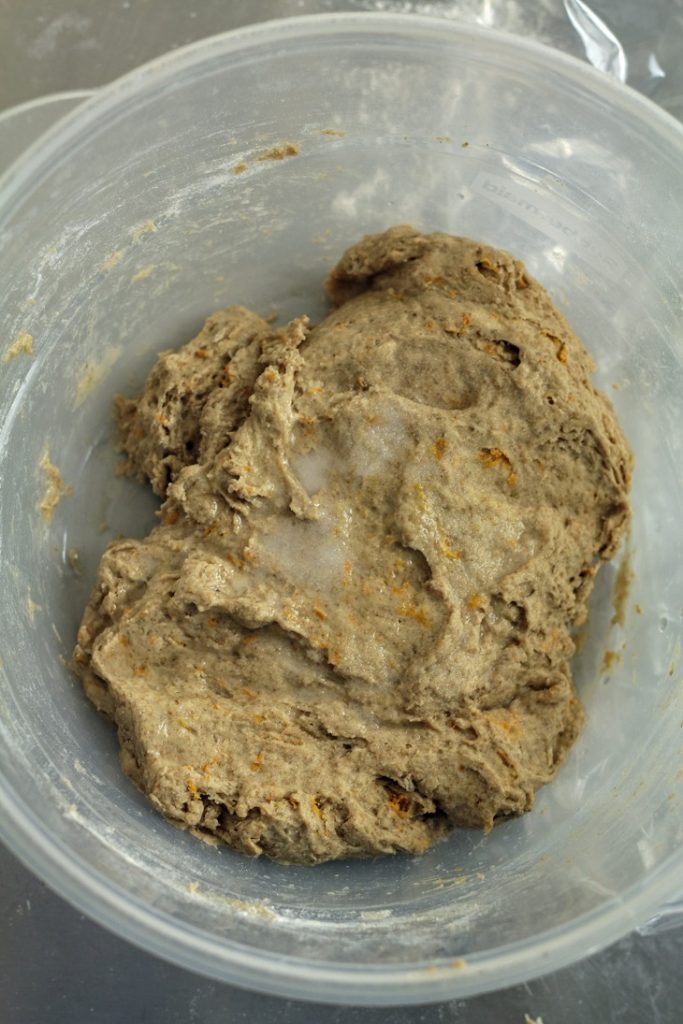
After a autolyse, add the salt. (dissolving it in 1-2 tbsp of water is fine) Mix and knead the dough lightly until it comes together to a smooth dough ball, like shown in the next picture. This won't take longer than a minute
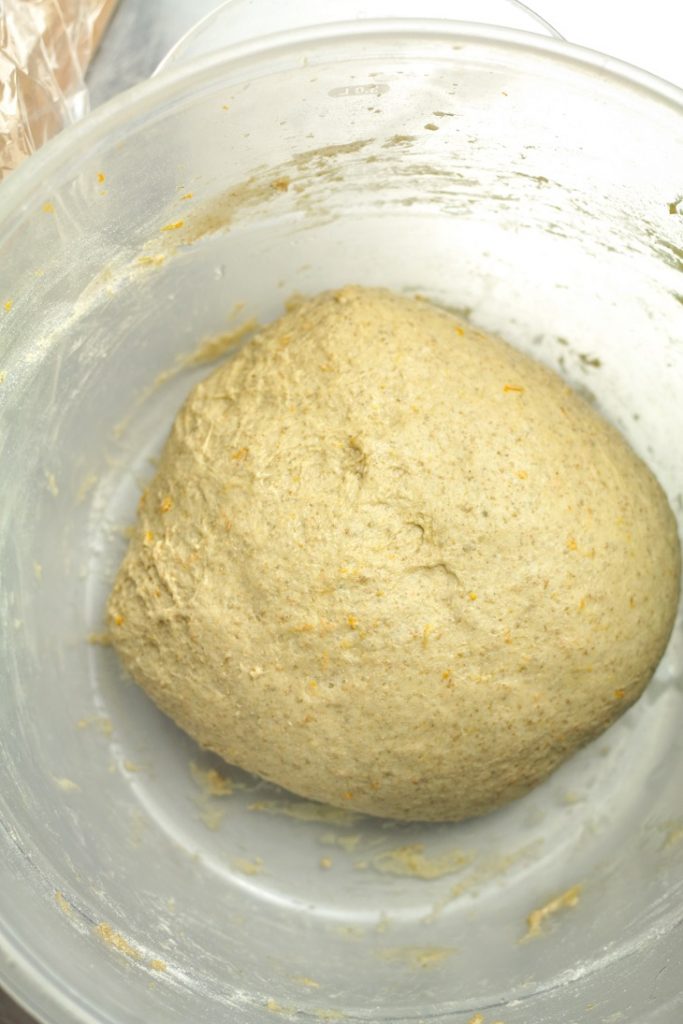
This dough is now ready for the bulk. Place it in the same bowl cover and set aside in a warm place.
We give 3 folds at 45 minute intervals during this bulk.
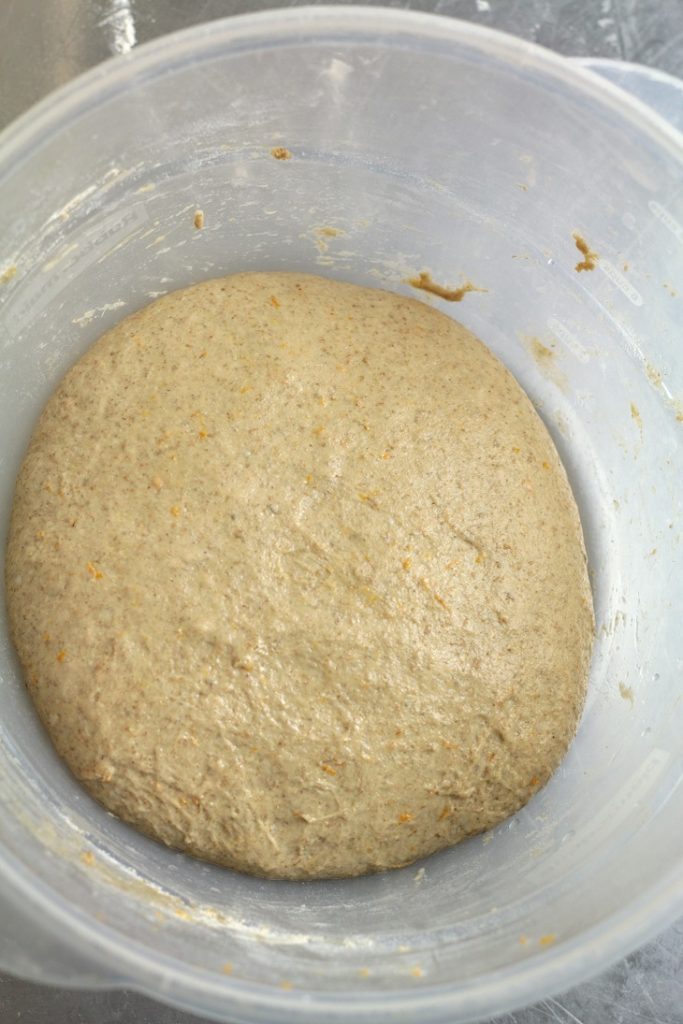
This is the dough after the first 45 minutes. Give this dough a fold. We usually call it a coil fold. This action will cause the gluten to stretch and further strengthen the dough.
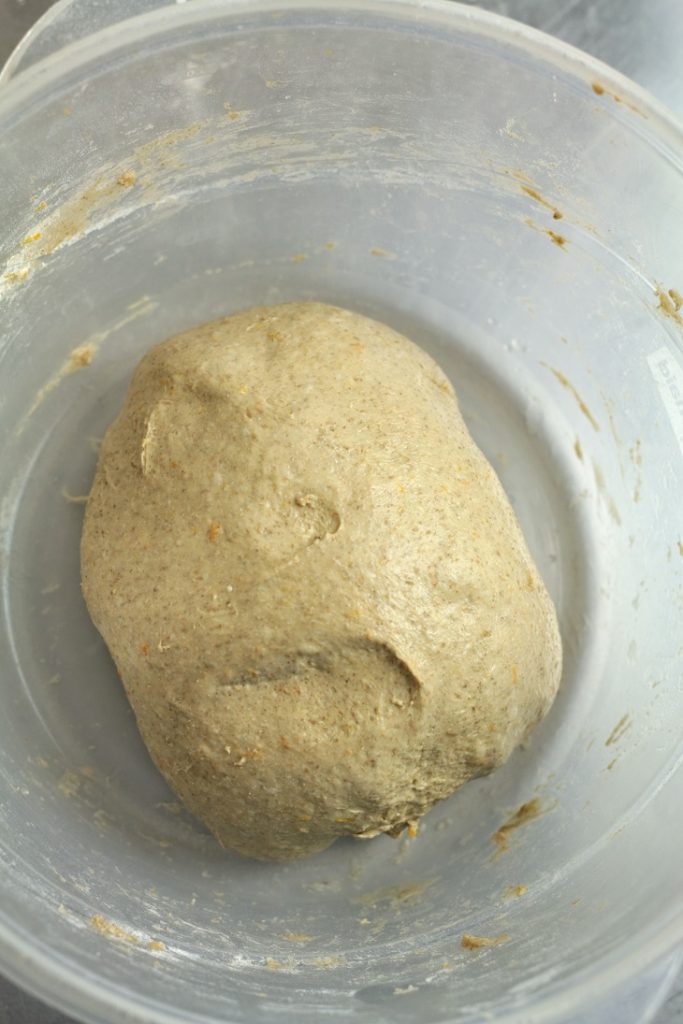
The dough after the coil fold will look much stronger and smoother.
Perform this twice more. The total bulk is 135 minutes after the three folds are done.
After the 3rd fold let the dough rest for an hour or longer if room temperature is below 72°F/25°C and pre-shape. Let the pre-shaped dough rest a further 30 minutes to relax gluten.
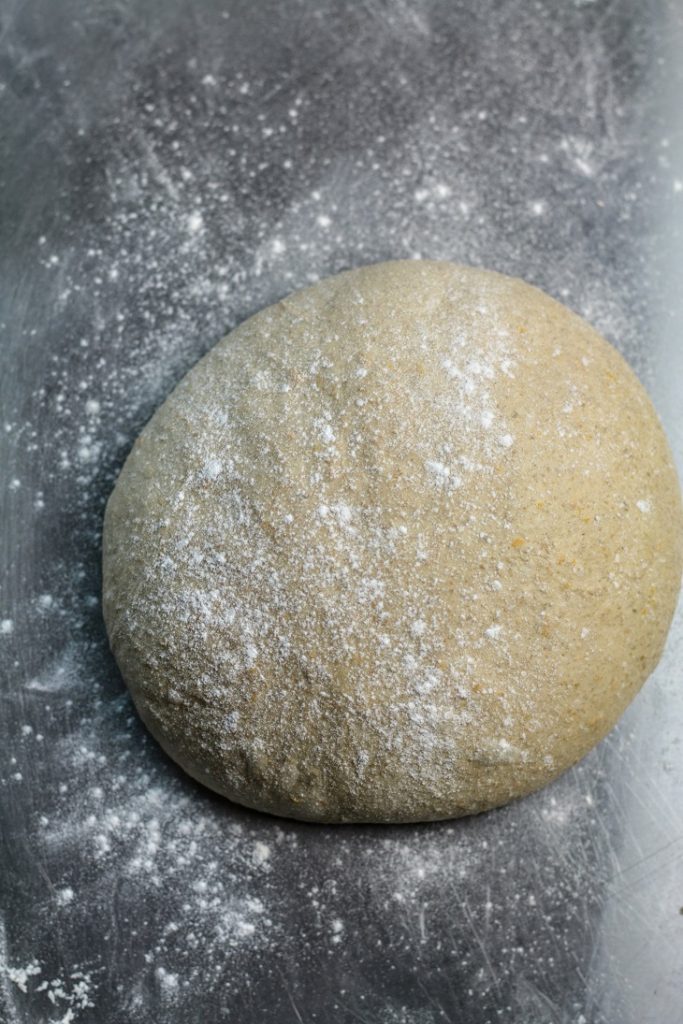
After the three folds, 1 hour rest and the 30 minutes after the pre-shape, the dough is ready for the final shaping.
Place the dough on a floured surface and shape into a boule or a battard. Check this shaping video to see how I do it.
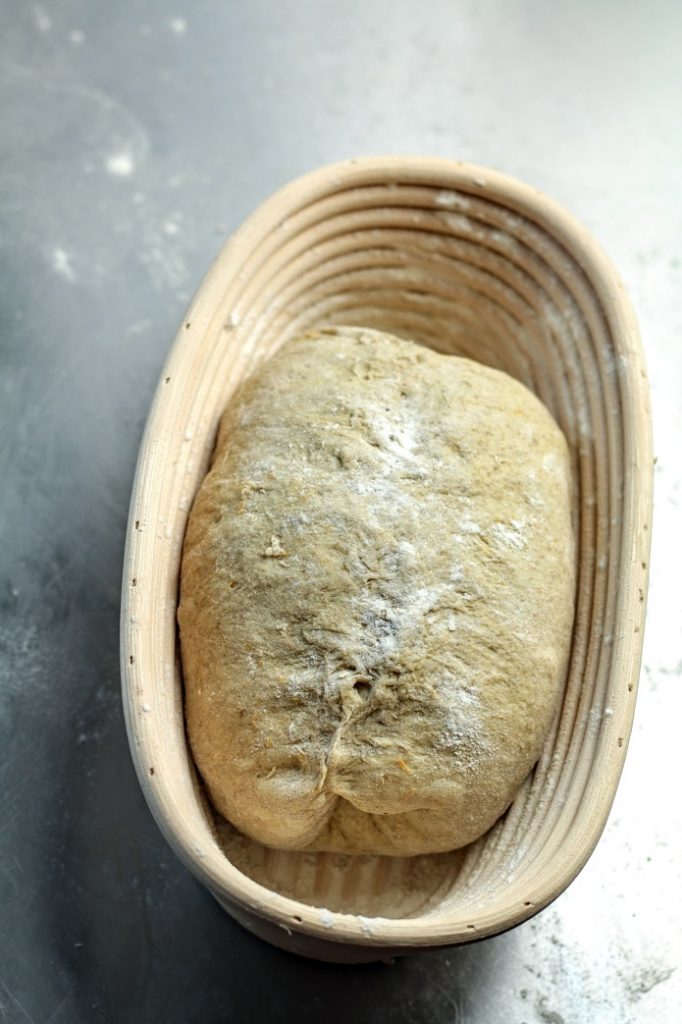
Once shaped, place the dough in a floured proofing basket. If you don't have a basket, use a glass pyrex bowl or a bread pan lined with a floured tea towel. In this video I have used a regular 9 by 5 loaf pan to proof my bread.
Cover this and place in the refrigerator for the retardation/long slow proof. 18-20 hours will usually get this loaf fully proofed for baking.
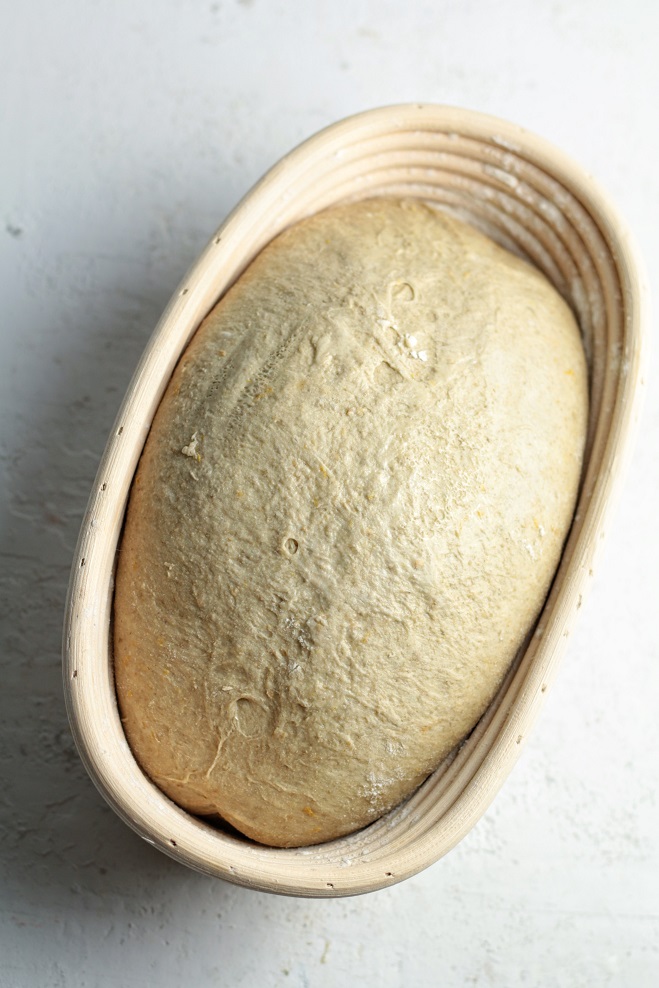
Preheat the oven before you bring the bread out!This is the fully proofed bread straight from the fridge. If your bread doesn't look proofed, then you can always let it sit outside (at room temp) until it is ready and preheat the oven while you wait.
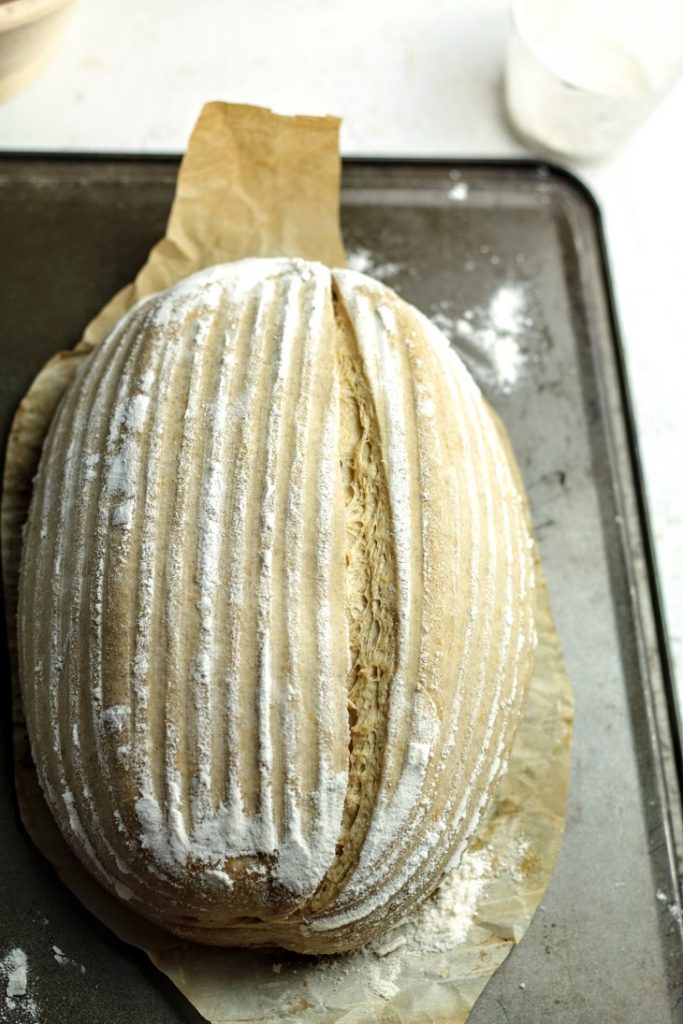
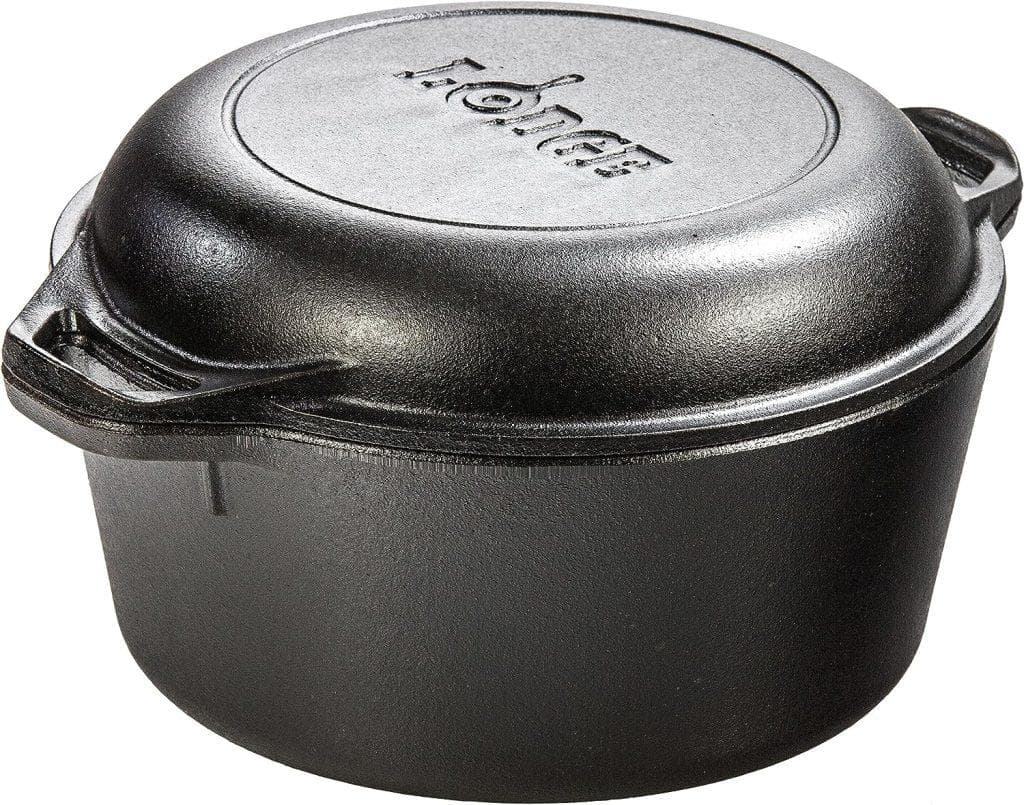
When the oven is ready, bring the dough out and invert the bread on to a parchment paper.(I cut my parchment to match the shape of the bread to stop over crowding the Dutch Oven)Slash the bread and place it in the pre-heated oven/ Dutch Oven (or however you usually bake your bread).
20 minutes at 500 °F and another 20 at 450 °F. If using a dutch oven, take the lid off for the second 20 minutes.
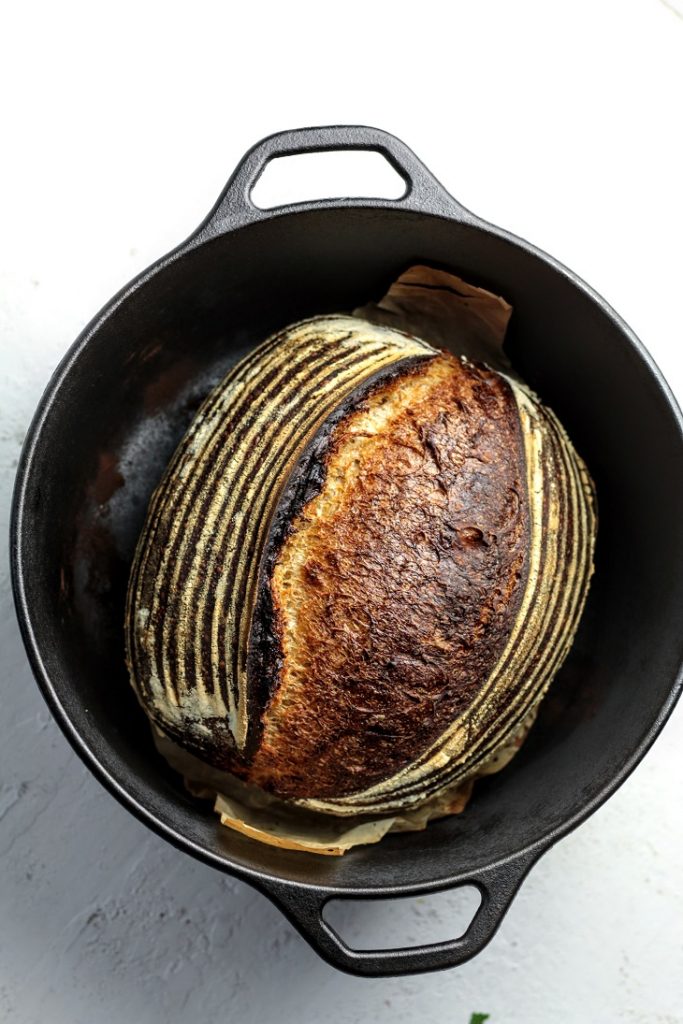
As usual, leave the bread to cool slightly before cutting into it. Cool completely before storing.
Shop the Ingredients

Rye, Molasses and Orange Sourdough
Ingredients
Method
- 1
Make the starter ahead of time
- 2
Place flours and zest in a big bowl
- 3
Add water, starter, molasses together and give a quick mix
- 4
Add the water mixture to the flour and mix using a spatula until well incorporated
- 5
Cover and set aside for an hour
- 6
Add the salt and mix to incorporate. Do not over mix. Knead for about a minute until dough is smoother. Check pictures above
- 7
Let this rest for 45 minutes, covered
- 8
And give a fold after 45 minute rest. Check photos and video above
- 9
Repeat this twice more (So 3 folds at 45 minute intervals)
- 10
After the final fold let the dough rest for 1 hours (or longer if your room temperature is below 25 °C / 72 °F)
- 11
After the bulk proof, pre-shape the dough and let it rest for 30 minutes
- 12
Then shape the loaf and place in the proofing basket
- 13
Cover with a plastic bag and refrigerate for 18 - 24 hours
- 14
When ready to bake, pre-heat the oven ( for 1 hour) with dutch oven in(if using), to 500 °F
- 15
Take the bread from fridge ( if it hasn't proofed, you can leave it out for about 30 minutes and place back in fridge)
- 16
Place the loaf on a parchment, score/slash and transfer to the dutch oven or directly in the oven/ pizza stone. Bake it whichever way you usually bake bread
- 17
Bake lid closed(if using a DO) for 20 minutes and then reduce temperature to 450 °F and bake a further 20 - 25 minutes with lid off (if using DO)
- 18
Let the baked bread cool on a wire rack
- 19
Slice and enjoy
Never Miss a Recipe
Get new recipes straight to your inbox.


Comments
Loading comments…