Pale Ale & Potato Sourdough Burger Buns

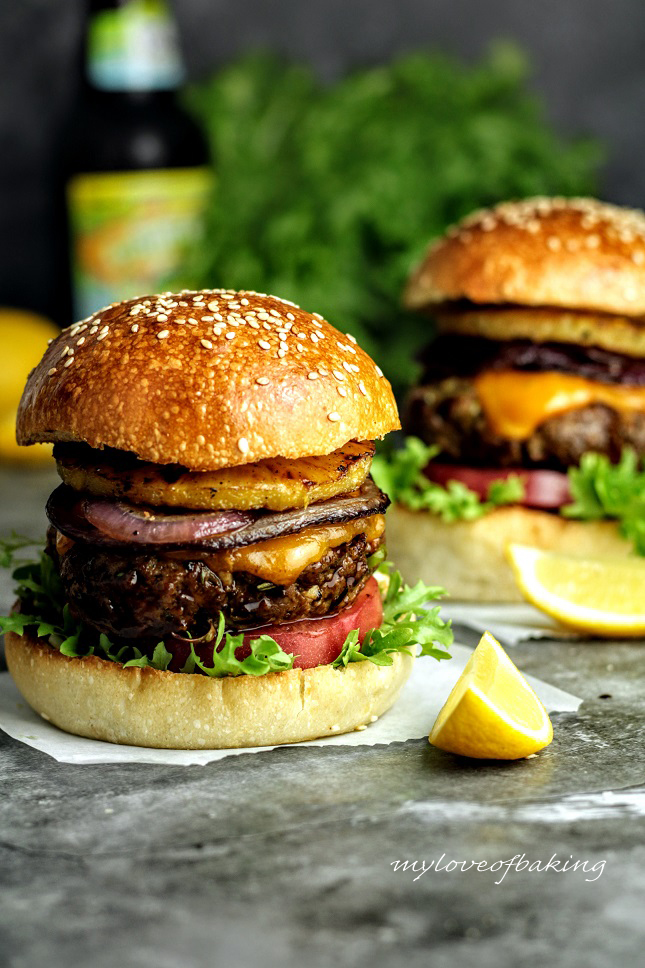
If you have already mastered the sourdough burger buns, consider this recipe as an advancement! An overnight preferment made using the sourdough starter, flour and pale ale is added to the dough to give extra flavor to already delicious buns. Boiled potato brings in extra starch that makes the crumb extra soft without the addition of milk or eggs.
I am a massive fan of sourdough bread with potato (spuds) and beer. If you are too, then check my 'Ale & Potato Sourdough Bread' recipe. The smell of these buns reminded me of that bread.
Preferment
A preferment is something that you should embrace if you are a baking enthusiast. It can be used to flavor your baked goods. You make a slurry with flour and whatever the liquid/flavor you want to infuse with and then let the yeast thrive in that. The secret is you use only a very little yeast or sourdough starter to make a preferment, as they will multiply during the fermentation period. This can be used to introduce (sour)flavor to bread without using an actual sourdough starter.
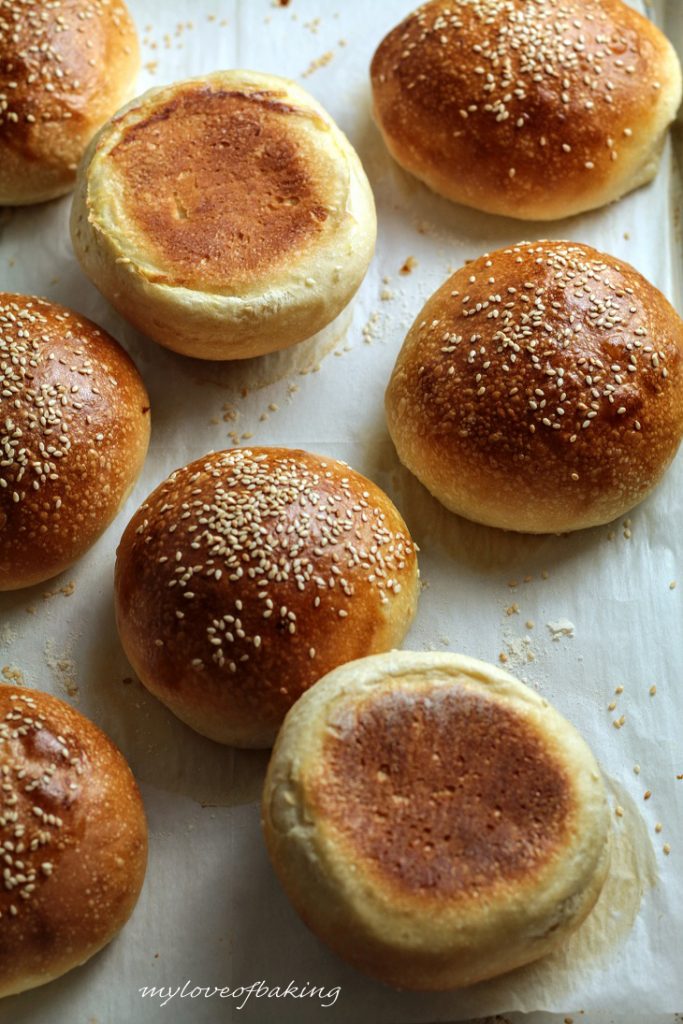
Feel free to use your favorite pale ale and experiment with different flavors (intensity). You might even be able to distinguish different buns made with different beers. Some pale ales are more pungent than the others (the hop is more pronounced in some) and it comes through in the baked burger bun.
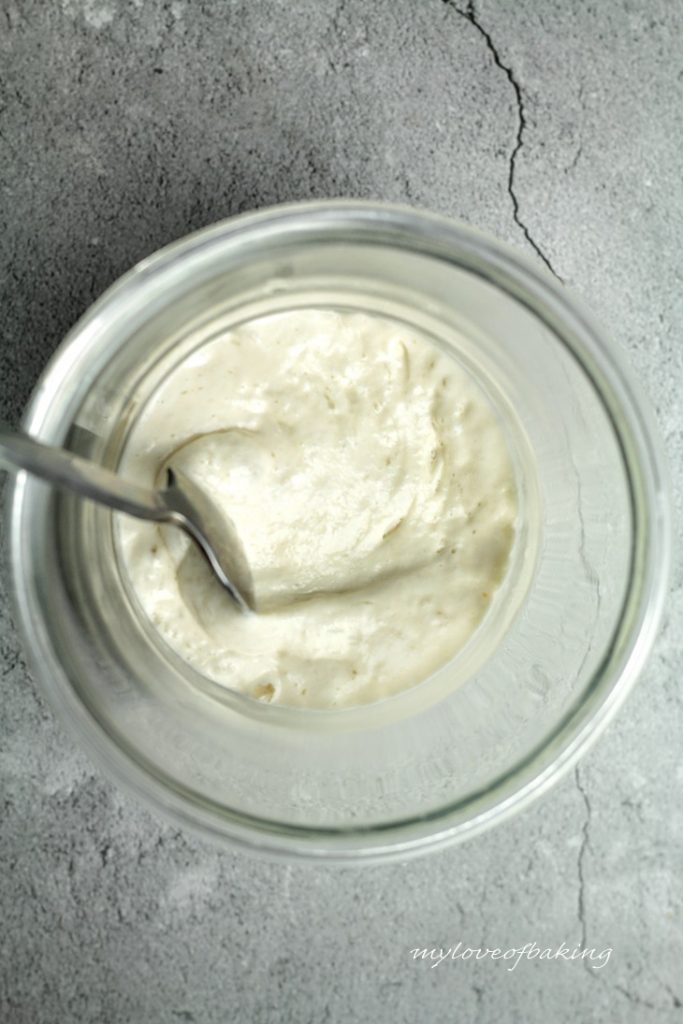
Refresh your starter as usual and make a 100% hydrated starter and use 40g of that to make the preferment
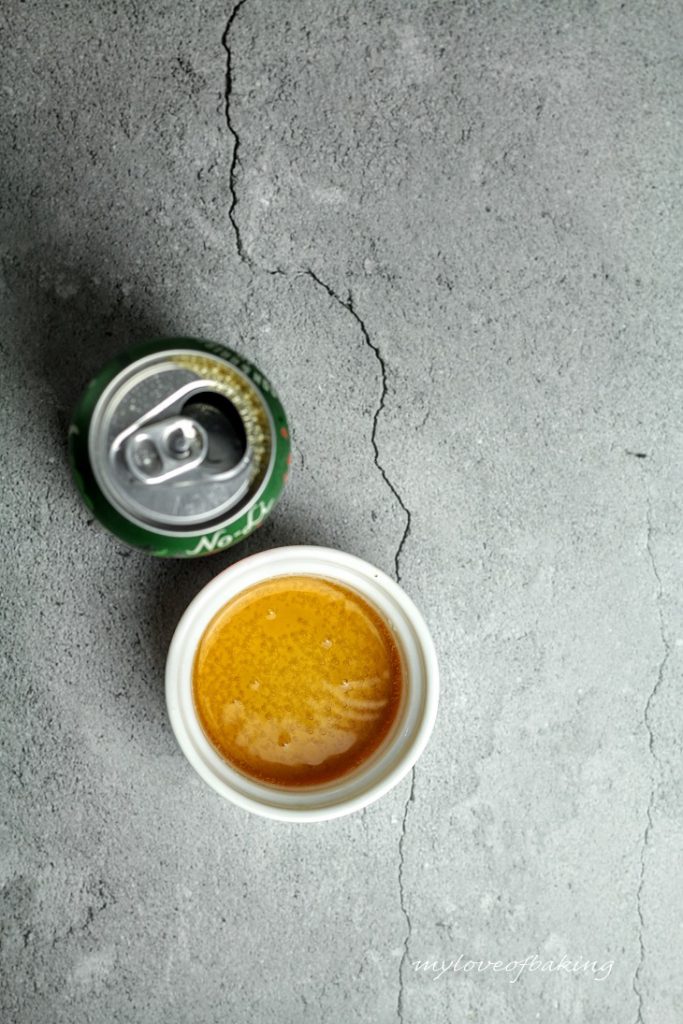
Pour pale ale to a container and let it settle before measuring the correct amount
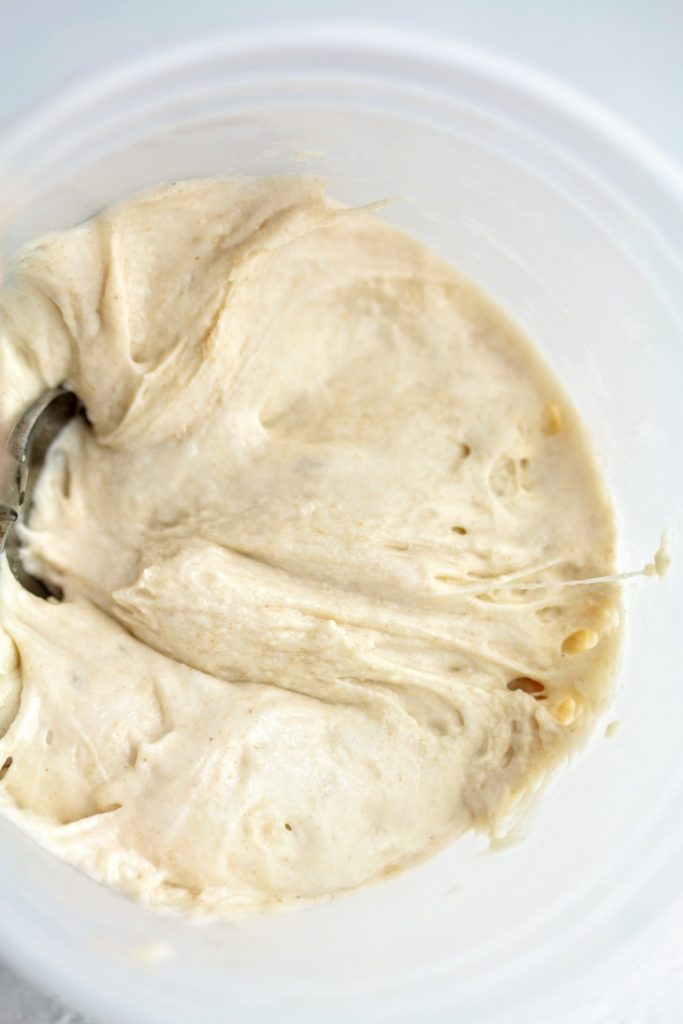
The mature preferment will look bubbly and expanded just like your ripe sourdough starter. It will have a strong vinegary (acidic) smell to it.
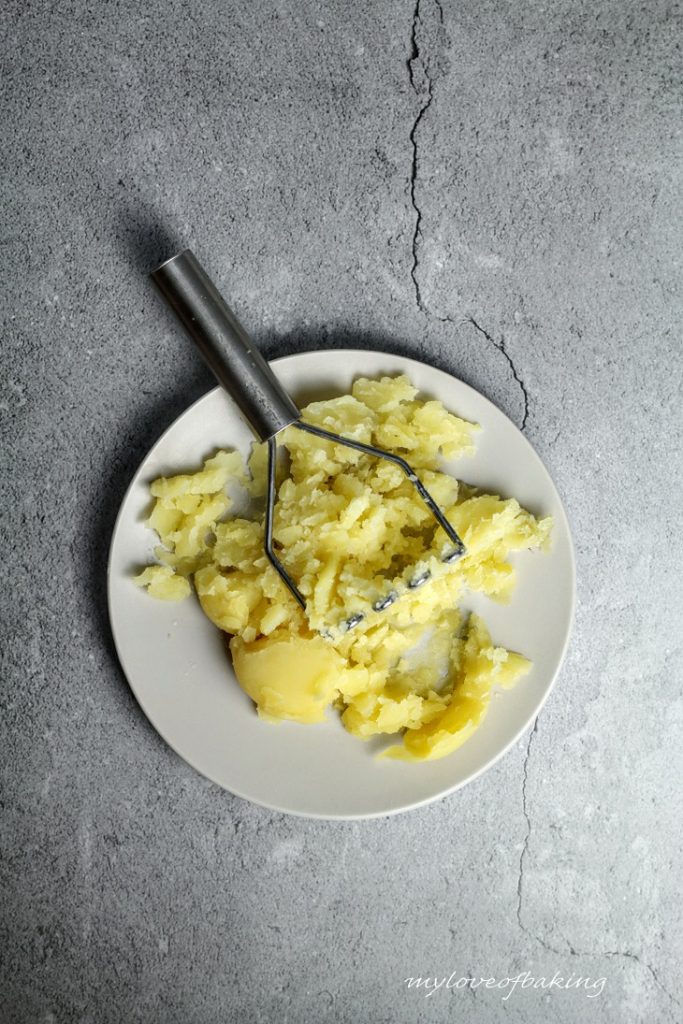
Either boil your potatoes or microwave until very soft. Peel and mash to a fine paste, using a masher or a spoon/fork.
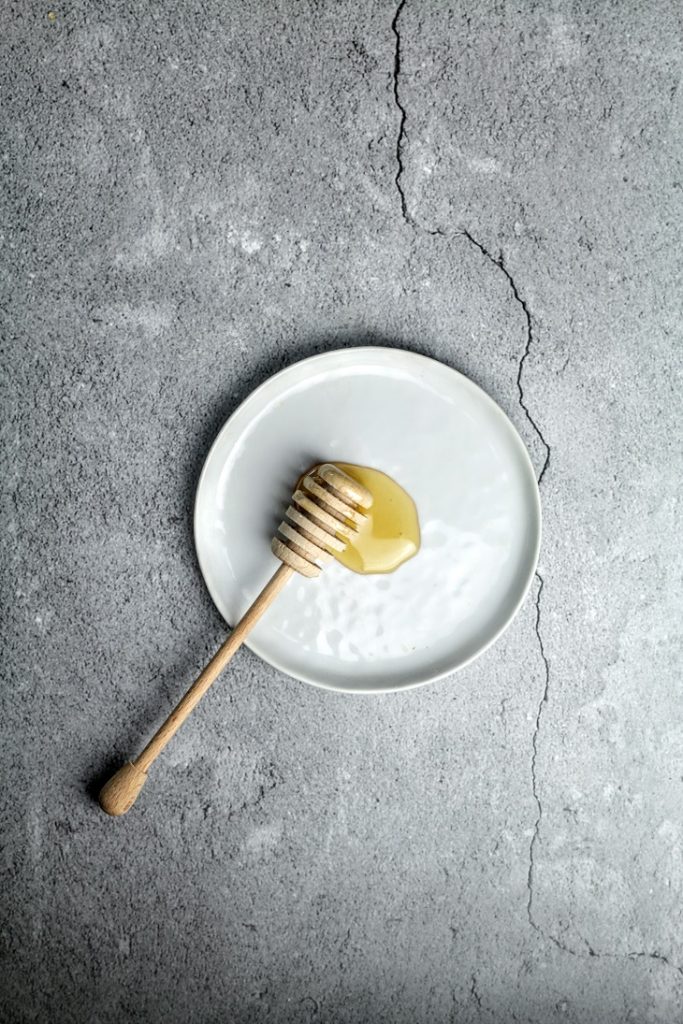
Use a mild honey. You can of course use a bit of sugar (white or brown) instead.
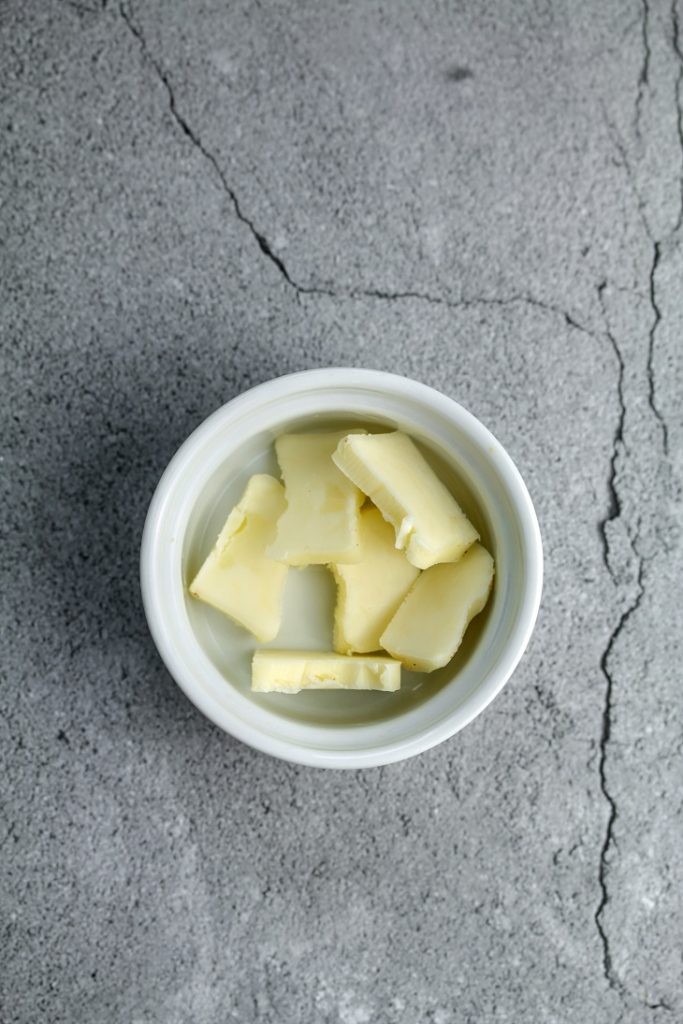
Fat:Fat helps make the crumb soft and silky, by lubricating the gluten bonds. Use either butter, bacon fat or some vegetable oil. Avoid using pungent olive oils if you want the flavor of ale to come through.
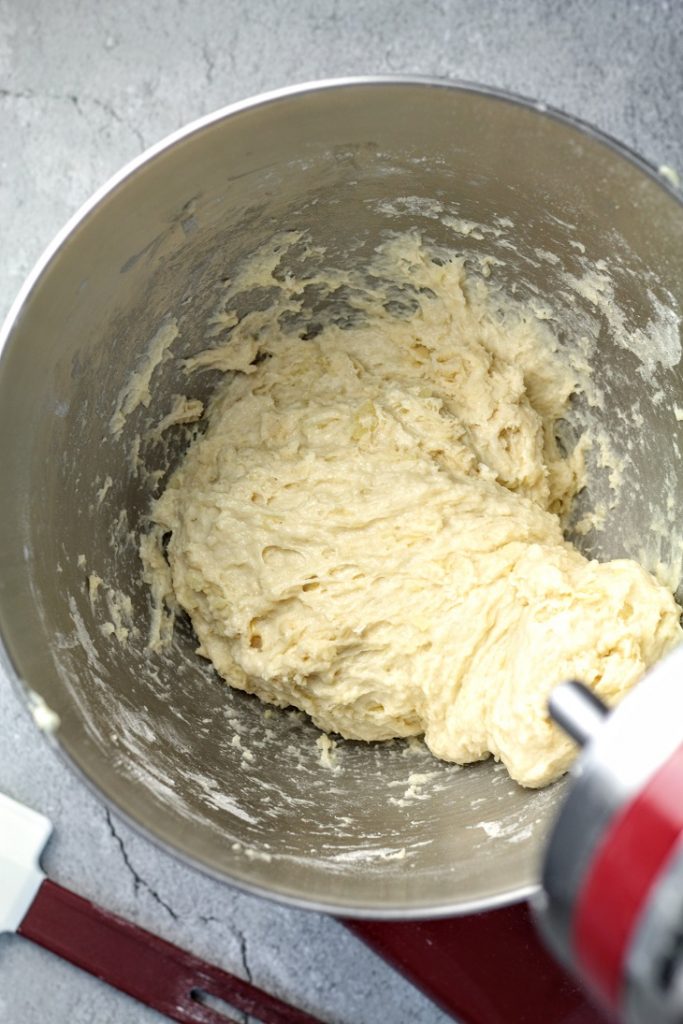
Add all ingredients in a bowl of a stand mixer(or mix by hand) except water. Start mixing and add water gradually until a soft dough is formed. Cover and leave to rest for 10-15 minutes and continue to knead on medium speed for 2-3 minutes. Dough will start to release from sides.
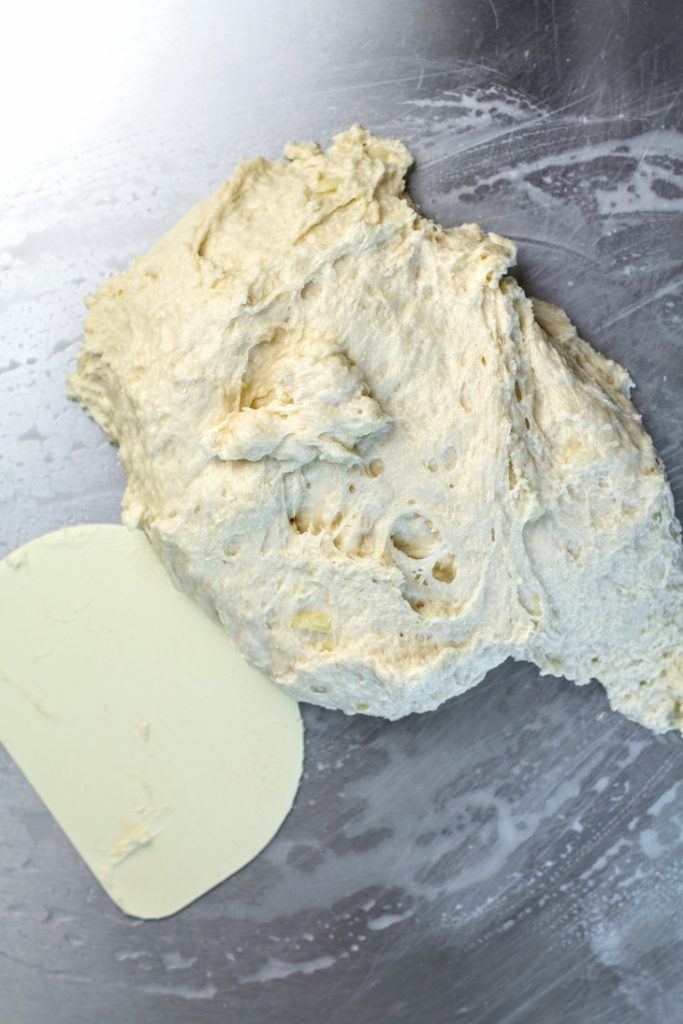
Bring the dough onto a table, wet your hands and perform slap and folds to finish off kneading. Do this until you get a considerably smooth dough.
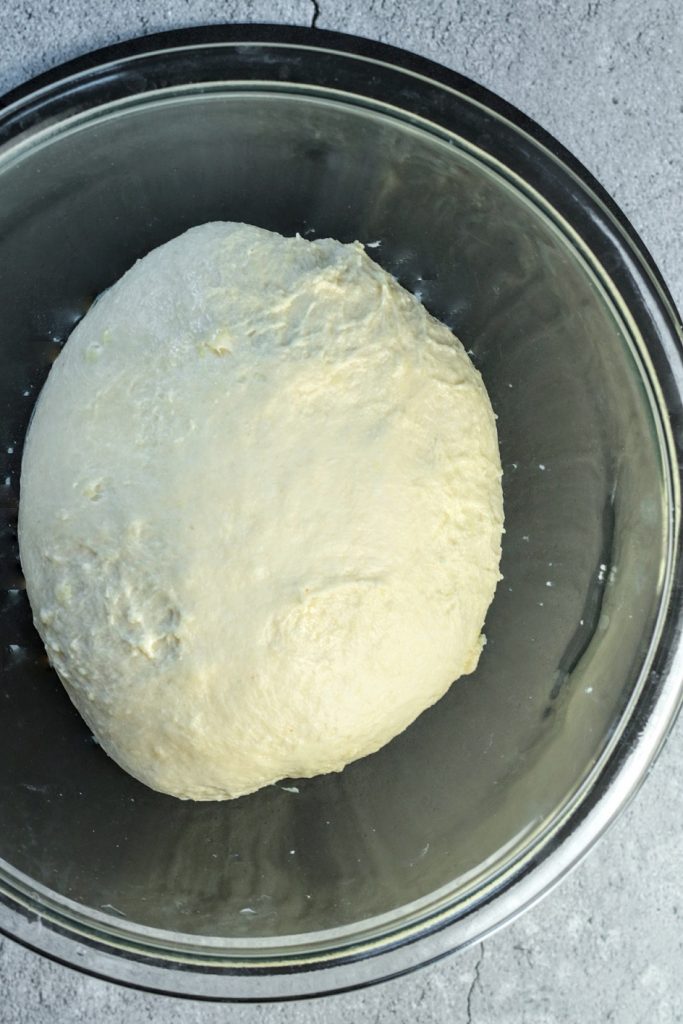
Place the smooth dough in a lightly greased bowl, cover loosely and leave in a warm place to bulk or until almost doubled in size. May take about 3-4 hours
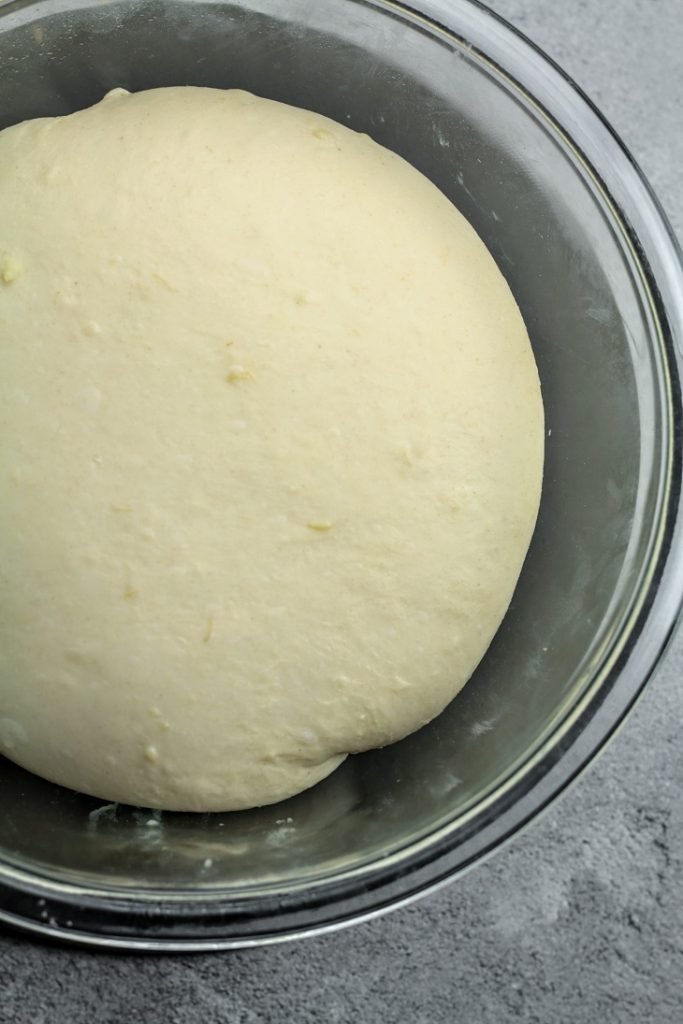
This how the bulked dough would look like.
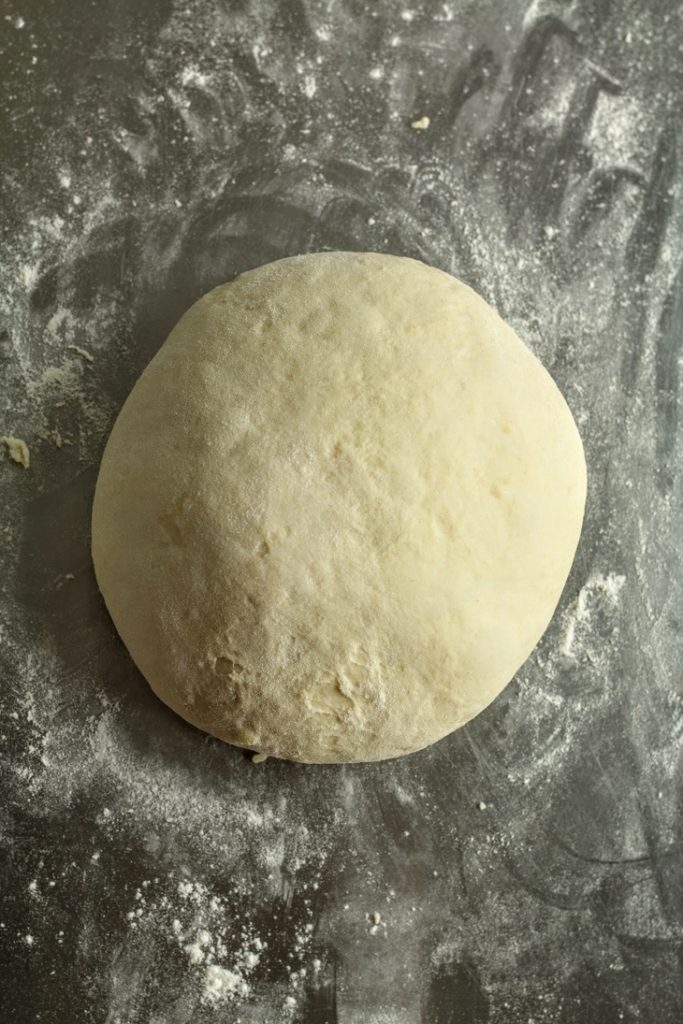
Punch the dough down, and round it up into a tight ball again. Place in an air tight container and refrigerate for serval hours for the slow fermentation. Anywhere from 12 to 24 hours
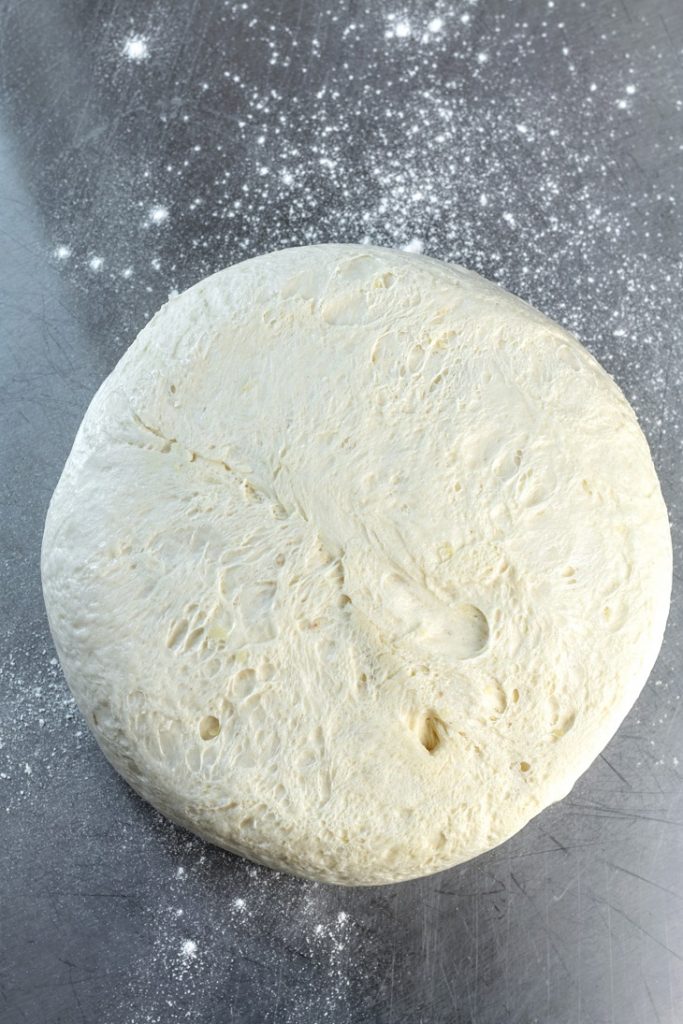
When you are ready to make the rolls, bring the dough out and let it sit for about 15-30 minutes
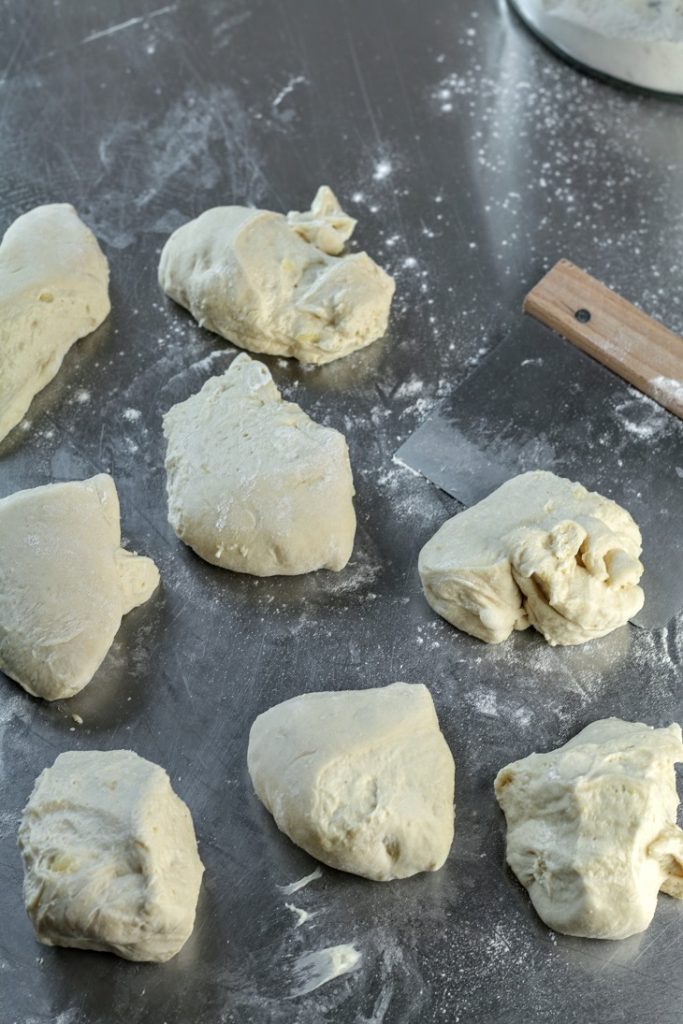
Divide the dough into 8 equal pieces
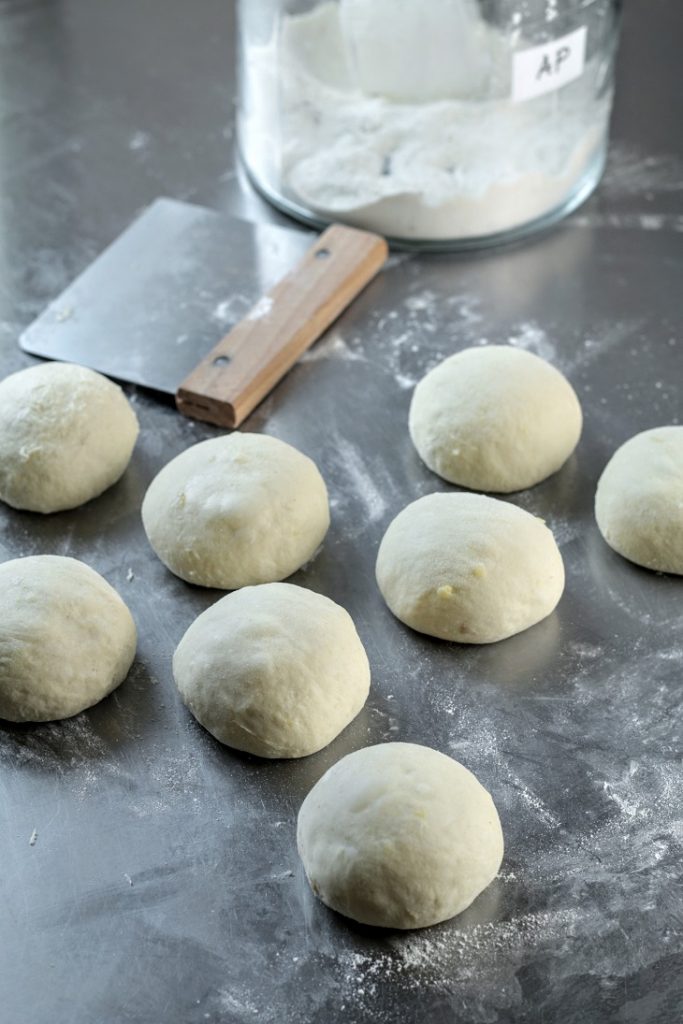
Shape the burger buns. Watch this video to see how I do it. The smoother the surface, the better and shinier they will look once baked.
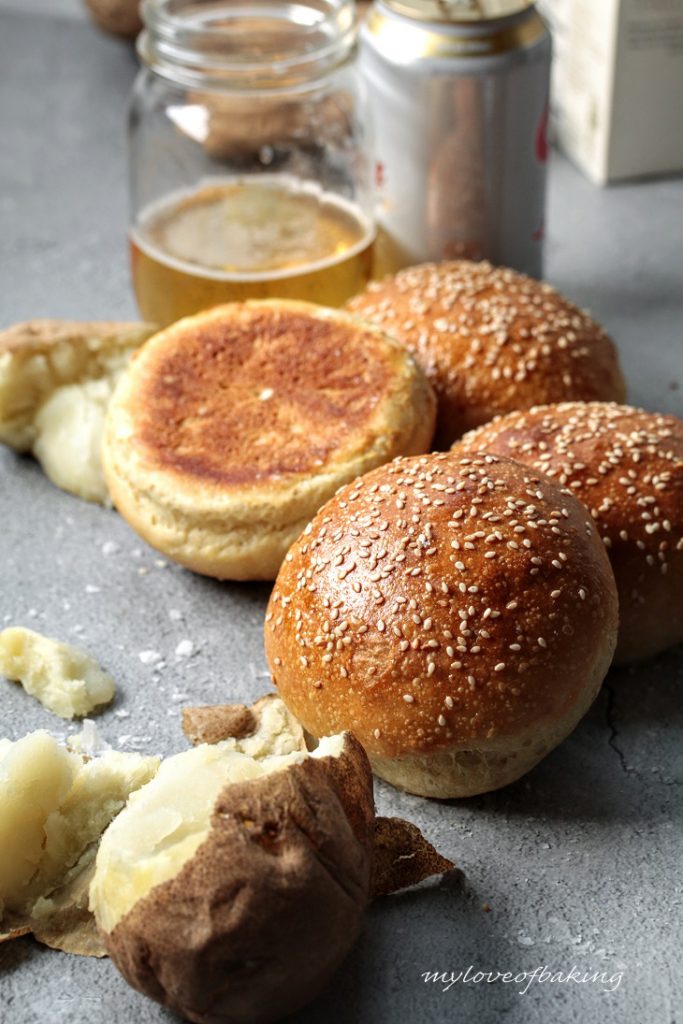
Place the shaped rolls on a parchment lined tray. Flatten each dough slightly with your palm. Cover loosely and let these proof for about 2-3 hours or until almost doubled in size like shown in the next picture
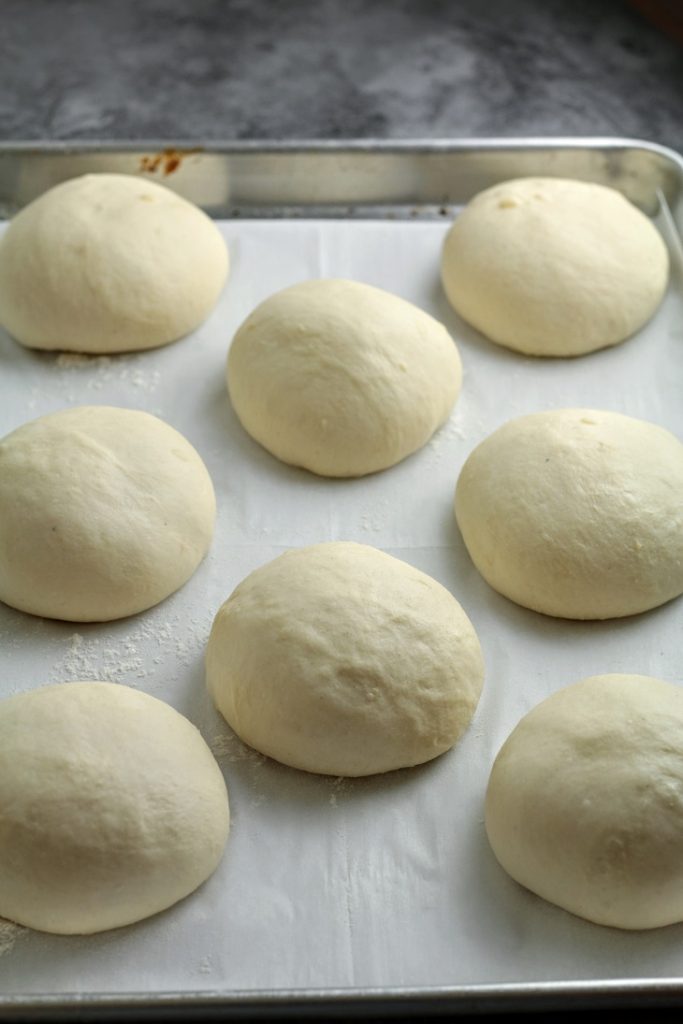
They not only grow sideways but upwards too. Do a poke test to make sure if they are proofed.
Pre-heat the oven to 425°F or 220°C.
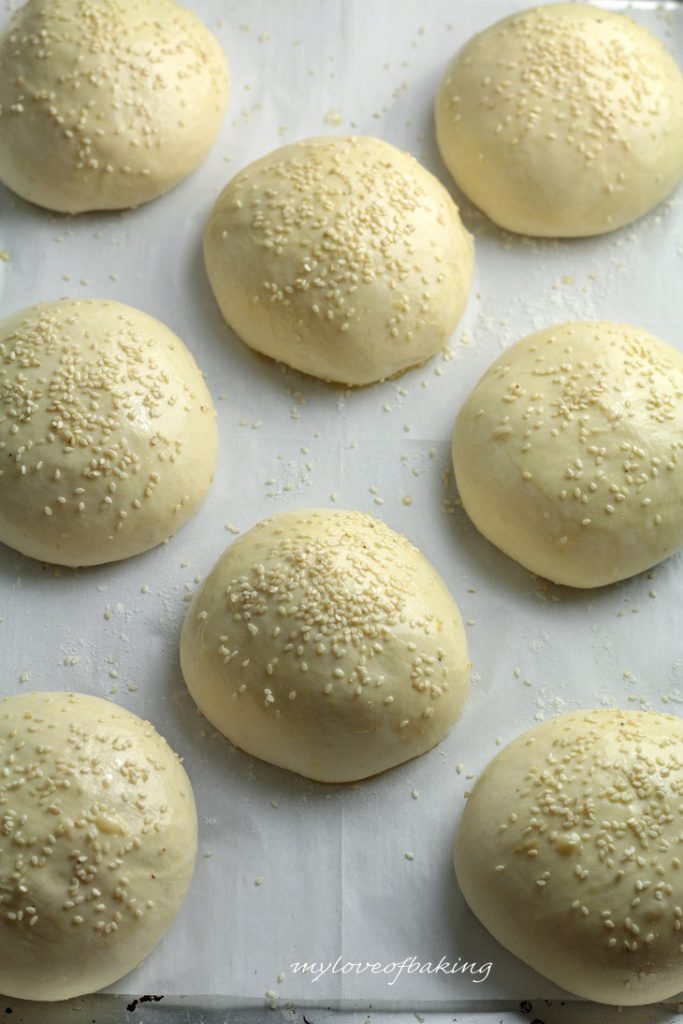
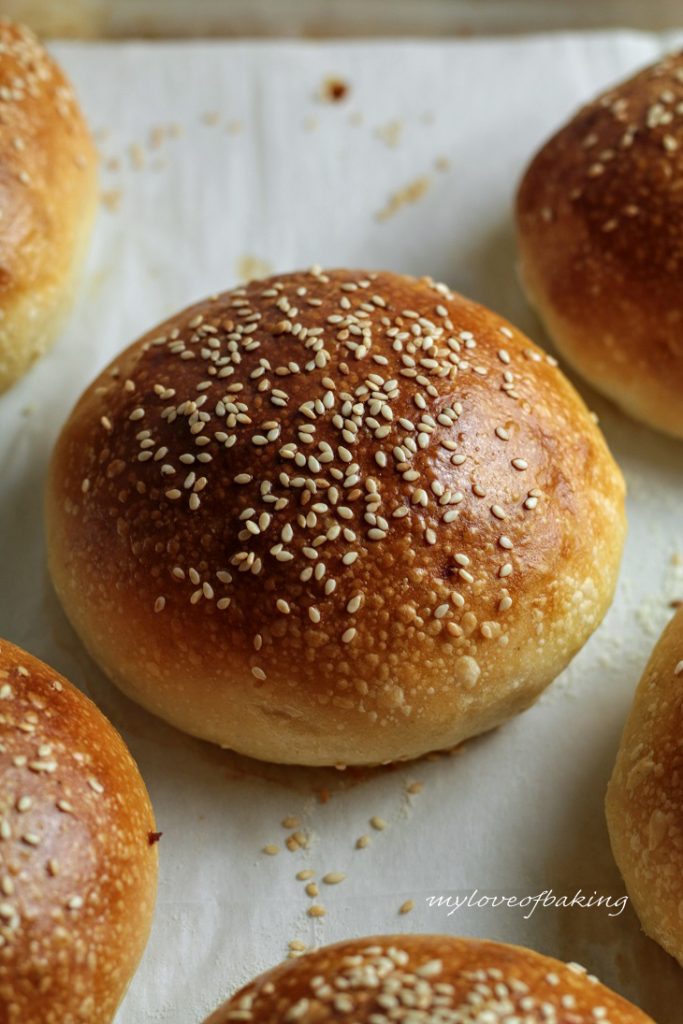
When the oven is ready, egg wash and sprinkle the buns and bake in the preheated oven for 15-20 minutes. Reduce temperature to 400°F and bake for a further 5-8 minutes until evenly golden brown all around
Use steam if you like a chewier skin.
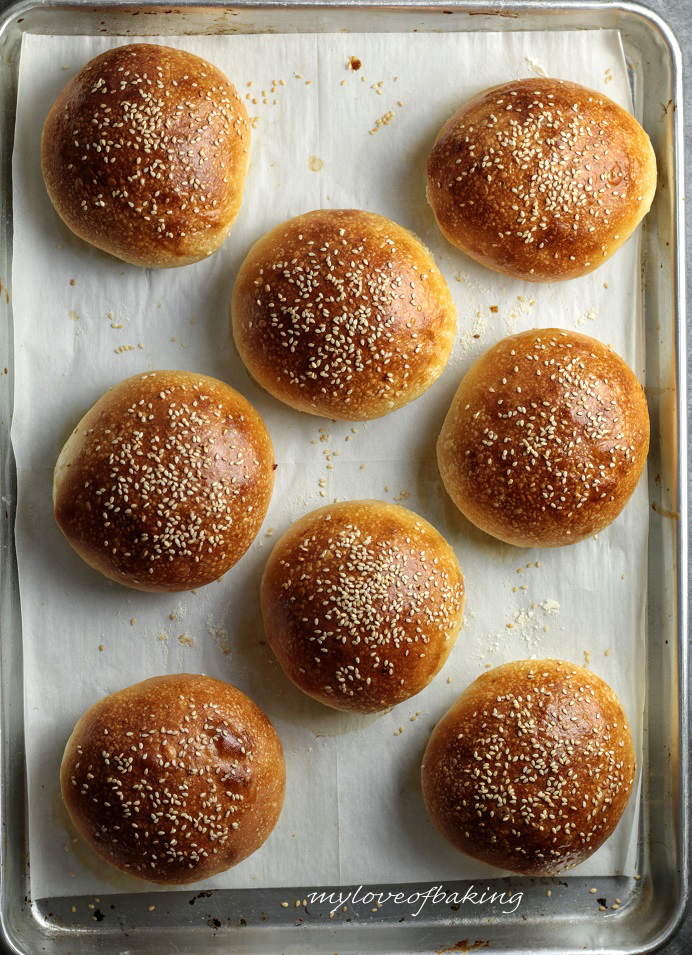
Leave the baked rolls to cool before storing away or using.
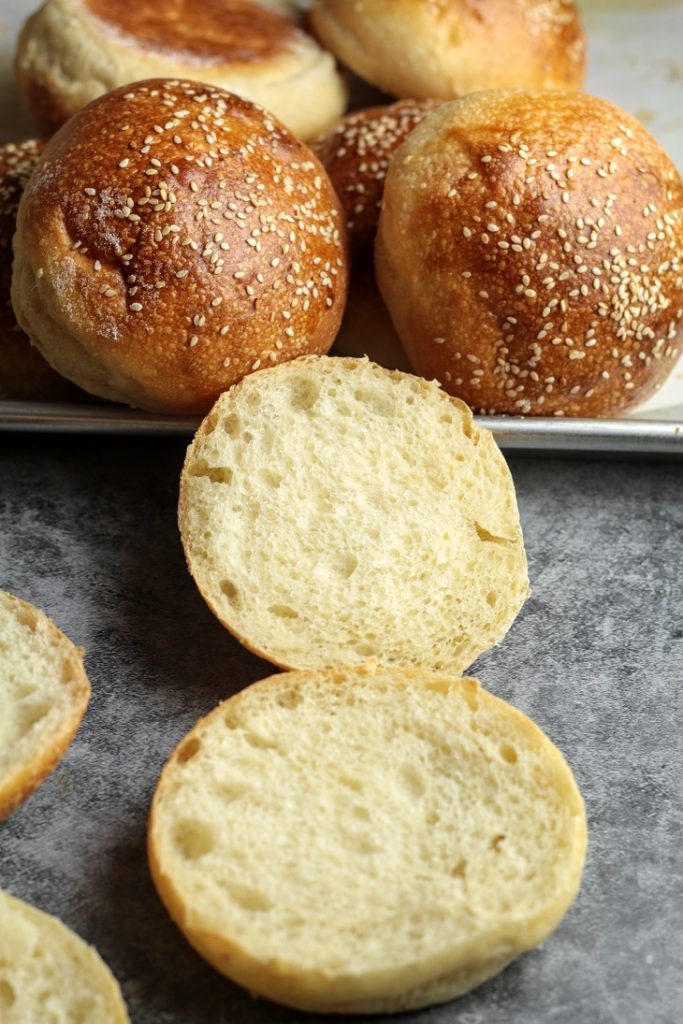
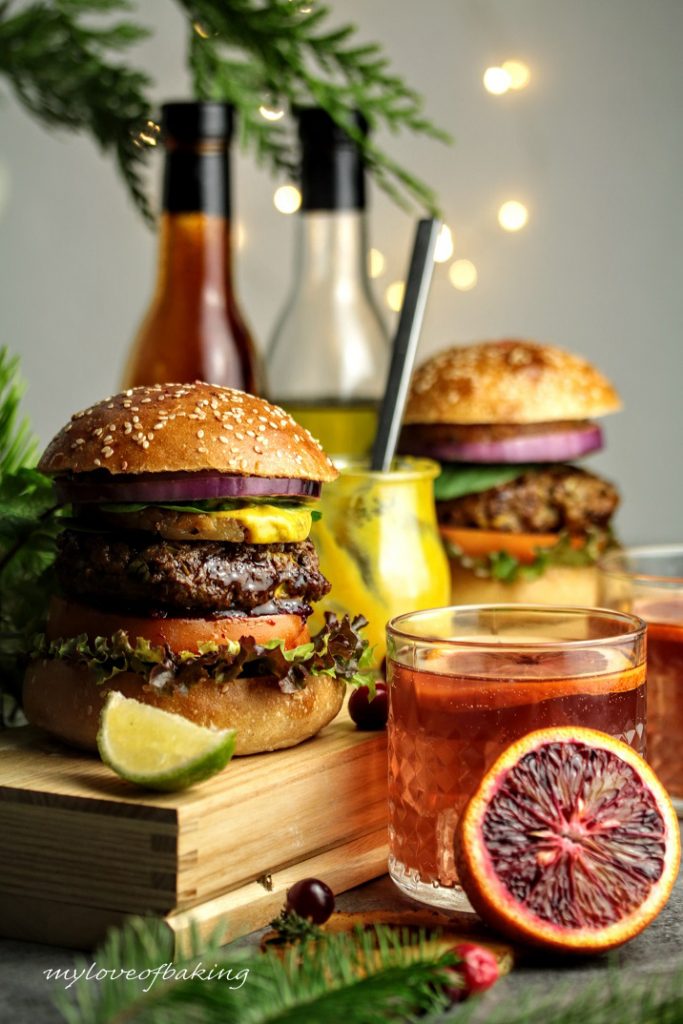
Pale Ale & Potato Sourdough Burger Buns
Ingredients
Method
- 1
Refresh the starter, let it ripe and weigh 40g for the preferment
- 2
Mix everything for the preferment, cover loosely and leave to ferment overnight (10-12 hours) at room temperature
- 3
Preferment should be bubbly and look very active when ready
- 4
To make the dough, place everything except for the water in a bowl of a stand mixer
- 5
Use the dough hook to mix this dough. You can mix by hand too
- 6
Start mixing and add water gradually, as you might not need all the water
- 7
When everything starts to come together, continue to mix low speed until a dough is developed. For about 2 minutes
- 8
Scrape down the sides of the bowl to encourage mixing
- 9
This dough might be a little sticky
- 10
Cover the bowl with a tea towel and let the dough rest for 15- 30 minutes
- 11
Then mix on medium speed for another minute or two, using flour to help release the dough from the sides of the bowl (should not take more than 4 minutes)
- 12
Dump the dough onto a table and use slap and fold to finish off kneading. Use water or oil to lubricate your hands
- 13
Shape into a smooth dough ball and place in a lightly greased bowl/container
- 14
Cover loosely and place in a warm place for bulk fermentation
- 15
The total bulk may take about 3-4 hours or longer in a cooler place
- 16
Once dough is almost double in size, punch it down
- 17
Round up the dough to a tight ball place in a container with a lid, cover tightly and place in the fridge until next day
- 18
Next morning, take the container out and let it sit for about 15-30 minutes or until the dough is soft
- 19
Then divide the dough into 8 equal pieces (100g each roughly)
- 20
Shape the dough pieces into rolls (dough balls )
- 21
Once shaped, place on a tray lined with parchment and press rolls lightly to flatten a bit
- 22
Cover loosely and leave in a warm place again until they are doubled in size
- 23
This may take about 3 -3.5 hours depending on how warm the proofing temperature is
- 24
When rolls are ready, pre-reheat the oven to 425°F or 220°C
- 25
Place a baking stone if you have one, this is optional, but would give a better oven spring
- 26
Once oven is ready, apply a thin coating of egg wash and sprinkle with sesame and place in the oven
- 27
Spray a little water using a spray bottle (use whatever method you usually do to get steam). It’s okay to note have steam too
- 28
Bake for 15-20 minutes and check. Rotate the tray if necessary
- 29
Reduce temperature to 400°F and bake for a further 5-8 minutes. If they are not done extend for a further 5 minutes. The top should be golden brown and rolls should be much lighter in weight. Bottom should have a light browning as well
- 30
Once baked, let the buns cool down on a rack
Never Miss a Recipe
Get new recipes straight to your inbox.


Comments
Loading comments…