Orange Panna Cotta With Orange & Mandarin Syrup

You can easily multiply the recipe to serve even a larger number of guests
Panna Cotta or Cooked Cream is a one of my favorite desserts to make and eat. Following are my reasons to love them so much;
They are so easy to make, takes only a few minutes to whip up and the rest is setting time.
Can be made ahead of time, so it is ideal when you have a lot of guest over. Makes a great weeknight dessert.
You can flavor them with literally anything. Chocolate, coffee, fruit, berries, tea, matcha, saffron, spices the list goes on...
Last but not least, you can use non-dairy milk to make these. Yes, I have used coconut milk/cream with great results.
Before jumping into the recipe, I will answer a few questions I received and mention some other important details.
Infusing the cream and milk
A great way to add flavor to your Panna Cotta is by infusing the cream and milk mixture. This is great when you want to add citrus, tea flavors or even vanilla which is the signature flavor for panna cotta. My favorite thing is to add lemon zest to vanilla panna cotta. If you wan to add chocolate or coffee just add that to the hot cream or milk. Make sure to strain the mixture afterwards.
Serving Panna Cotta
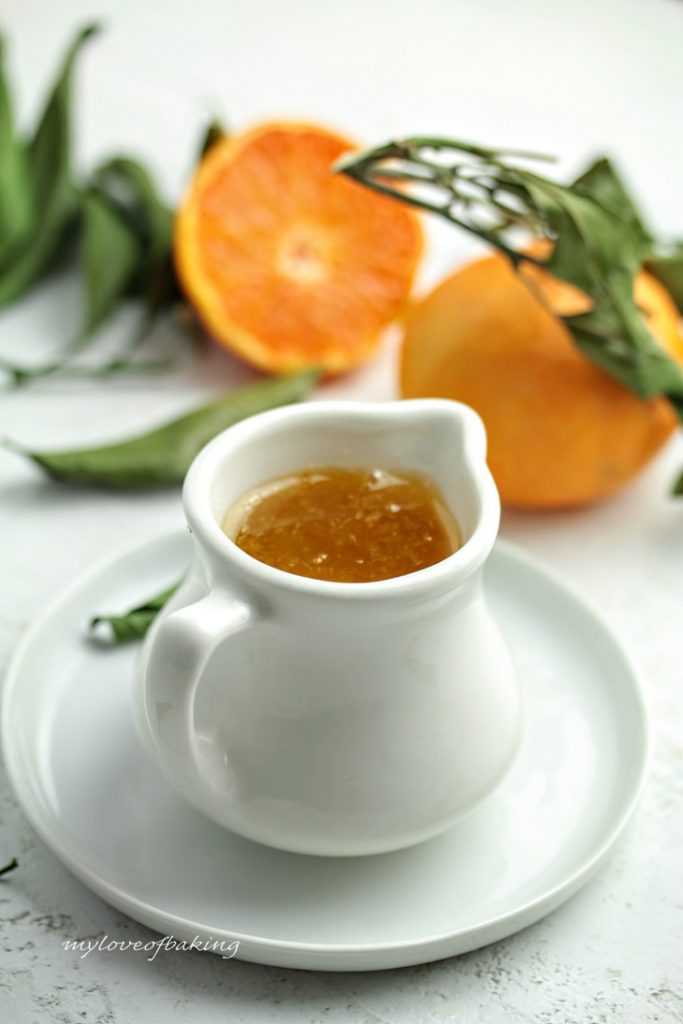
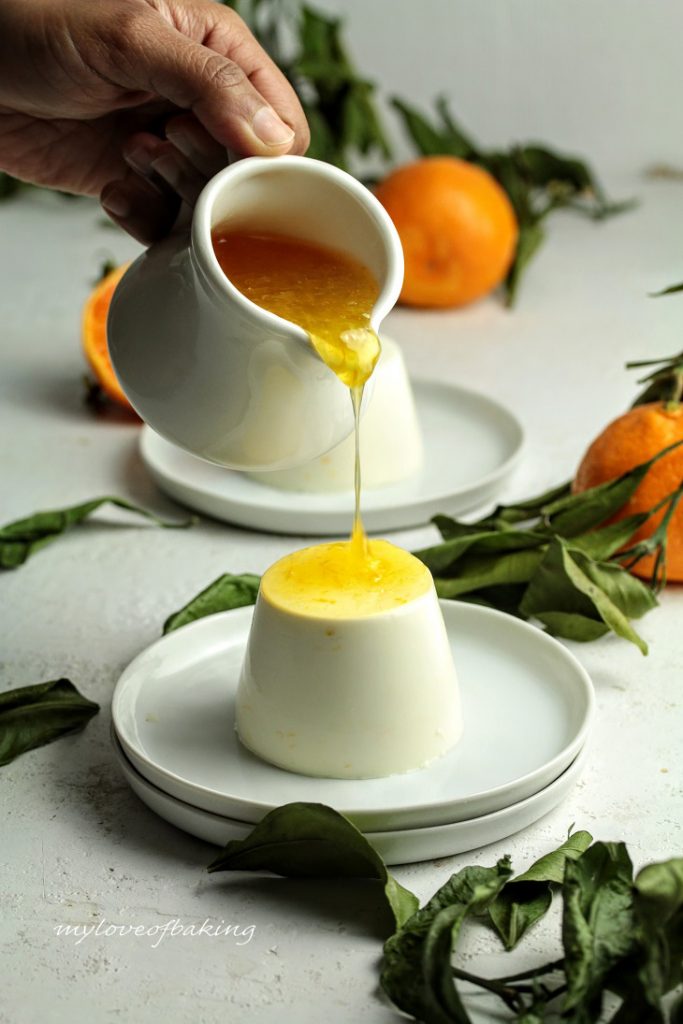
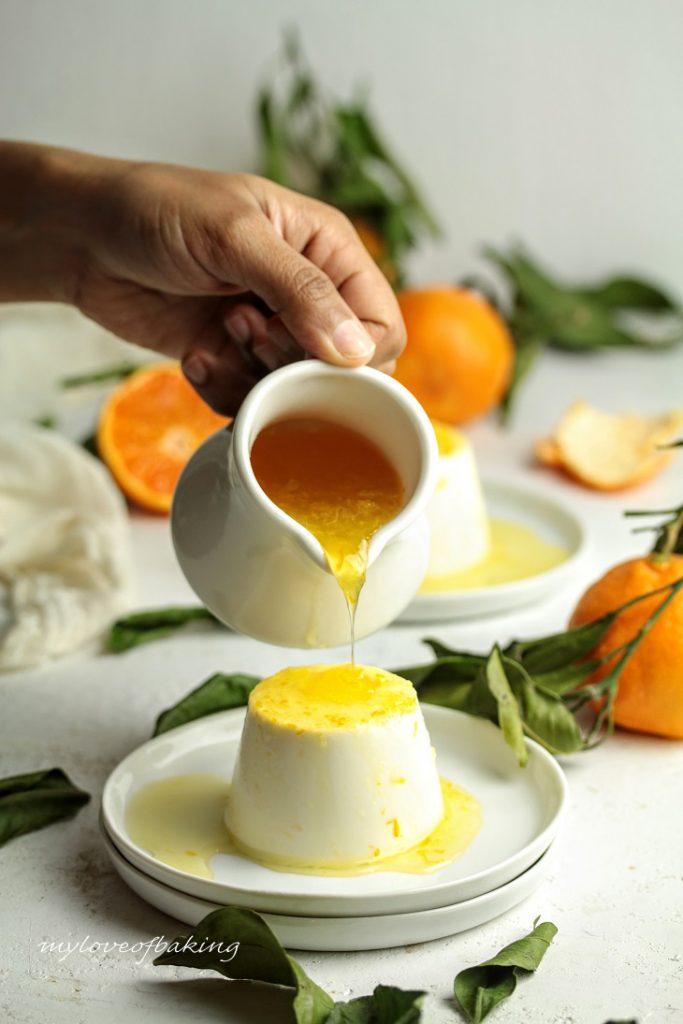
I usually serve them as is or with some fresh berries. Lately I have started to experiment with light syrups and coulis. Vanilla panna cotta with raspberry coulis is a match made in heaven. In this recipe, I'll show you my latest twist, which is an Orange and Mandarin Syrup.
Getting the perfect wobble
If you add too much gelatin, the panna cotta would set too hard and be very rubbery. It is not very pleasant to eat. So using the right gelatin to liquid ratio is crucial. One thing to note is, if you are adding a lot of extra liquid (more than 2 tablespoons) for flavor, like orange juice, tea, etc. make sure to adjust the amount of gelatin.
Also adding chocolate will cause the panna cotta to lose their wobble a bit. As chocolate contains fat which will set hard in the fridge.
Do not pour hot syrup or toppings on the panna cotta, as it will cause the set dessert to melt right away.
Which gelatin to use
You can use either powdered(granules) gelatin or sheets. Rough conversion is;
1 tablespoon powdered = 1 envelop(7g) granulated = 3 sheets(225 strength)
Personally I preferer to use gelatin sheets as they are reliable, no need to weigh, easier to store and dissolve easily. I used to get intimidated by the sheets until, I got a chance to use them excessively at the bakery school and then later when working in the industry. I encourage you to try it if you haven't.
The type of gelatin you use doesn't affect the taste or the end result, it is entirely up to you to decide.
Gelatin may have varying setting strengths (bloom strength). Read the packaging to see the ratio. It says how much to use to firmly set 500ml of liquid or so. And for panna cotta use a little less than required (.75 times), otherwise it firmly sets the liquid.
eg: Knox gelatin is 225 bloom and Gold sheet gelatin is 200
Read more here about gelatin strength and conversions if you are interested.
To bloom powdered/granulated gelatin, you have to dissolve it in some liquid(use some from the recipe) and set aside for about 5 minutes. This will ensure that the gelatin will be dissolved evenly and fully. Once bloomed, you can add it straight to a hot liquid and stir to dissolve. If the liquid is not hot, you can microwave/heat the bloomed gelatin until it becomes liquid and then add it to your mixture.
To bloom gelatin sheets, submerge them in a big bowl of tap cold water and set aside for 2-3 minutes (don't leave too long as it will break down and it would be difficult to fish out the pieces). Squeeze off the excess water and add straight in to a hot liquid and stir to dissolve. If the liquid is not hot, you can microwave/heat the bloomed gelatin until it becomes liquid and then add it to the mixture.
Avoid re-boiling the liquid with gelatin in it. This might cause the gelatin to change its texture and curdle. If the gelatin didn't fully dissolve, it is okay to slightly heat the liquid (over a double boiler is the safest) and stir until gelatin disappears.
Setting Panna Cotta
Just like any gelatin set dessert, refrigeration is the best option. Gelatin will start to set as it cools and firm up at room temperature too, but this may take a very long time and it is not an option when setting milk or cream which could 'go bad' pretty quickly at room temperature.
Freezing will cause the mixture to crystalize and the texture will be icy. So avoid doing this.
Panna cotta will set in about 5-6 hours in the refrigerator. It may take longer depending on the ingredients. Too much sugar, fruits will slow down setting and also the strength of gelatin. So give as much time as possible.
Molds
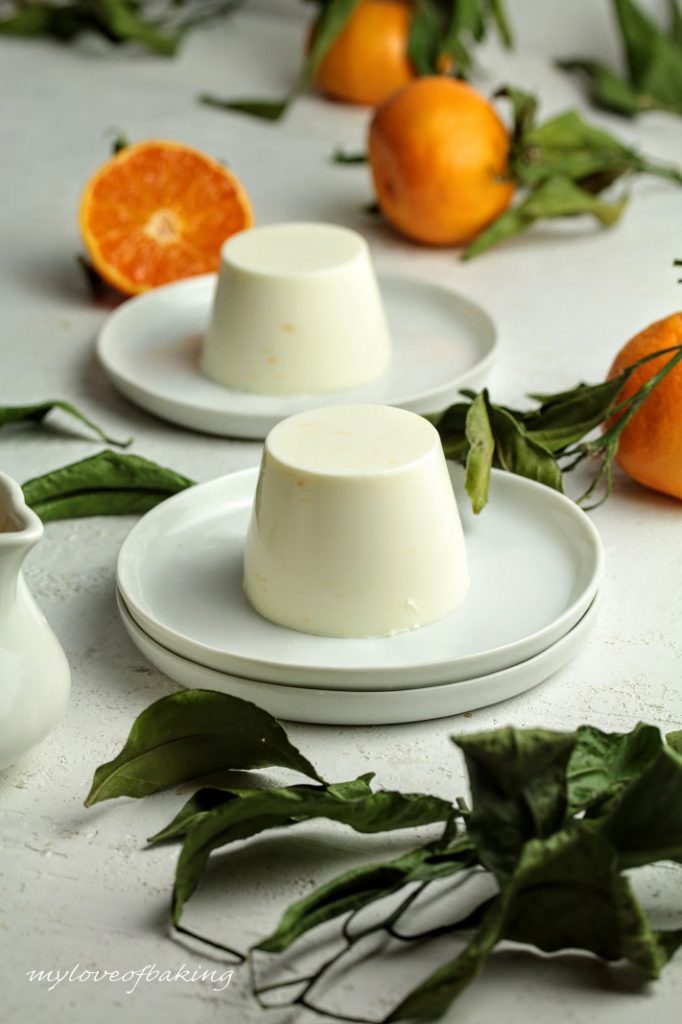
You can use any type of mold. Stainless steel, ceramic, plastic etc. If you don't want to invert the panna cotta, you can set them straight in glass serving jars.
I find plastic mold to be the easiest when it comes to demolding. Because it is flexible, you can slightly squeeze the sides to encourage release.
If you are planning on inverting, it is a good idea to lightly grease/oil the interior. Oli your finger lightly and just rub the interior. Do not use excessively, never try to brush with oil or butter. You just need to reduce traction a bit, so the set panna cotta would slide off easily.
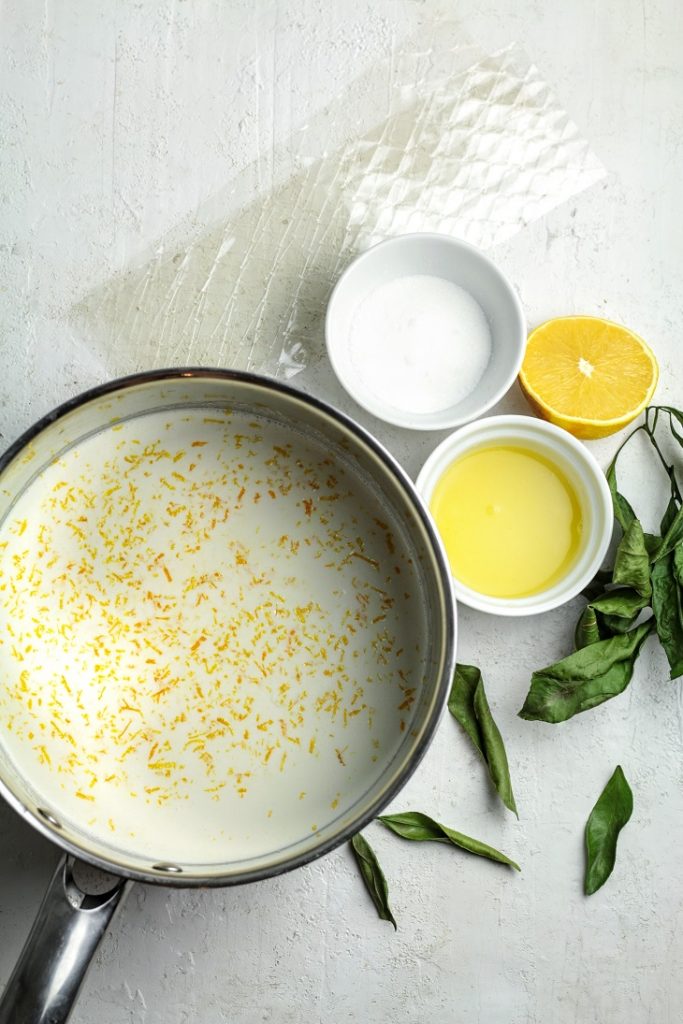
Place cream and milk in a saucepan, Add the zest of two oranges. If you like it to be zingy add some lemon zest too.
Place the cream and milk mixture on medium heat and add the sugar and orange juice. Stir to dissolve all the sugar. Bring to a boil and take off the heat
While the cream and milk heats up, bloom the gelatin.
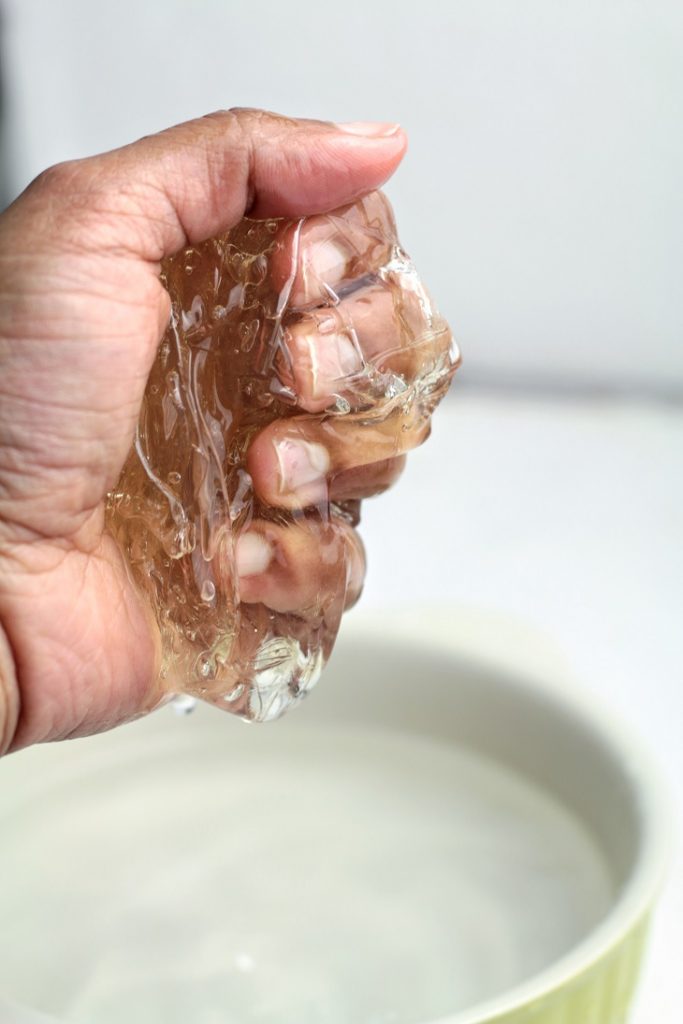
If using sheets, make sure to squeeze out as much water as possible after blooming.
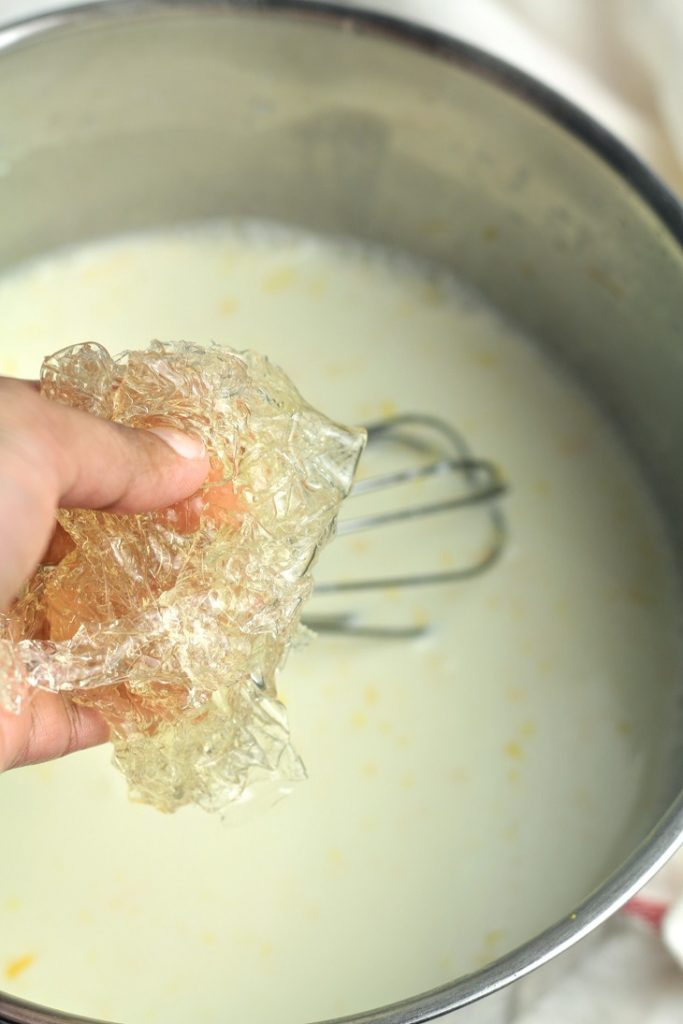
Add the bloomed gelatin to the hot liquid and stir until all the gelatin is dissolved. Bloomed gelatin dissolves very fast.
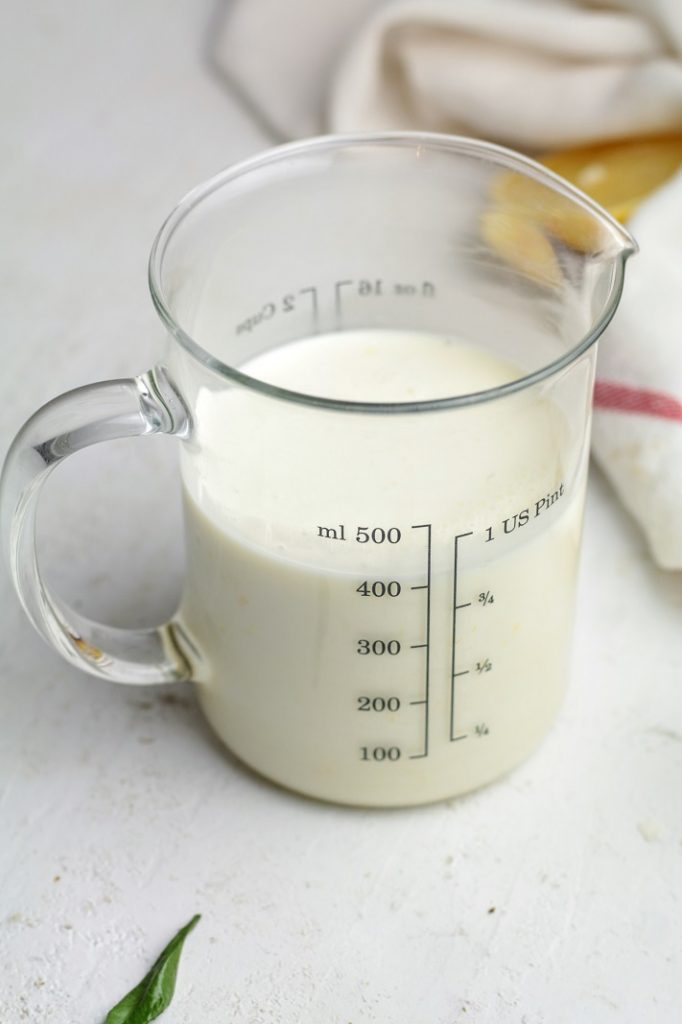
Prepare your molds, ramekins or serving glasses. Strain the milk and cream mixture into a jug. Use any mold you like. They can be plastic, sillicon or even ceramic.
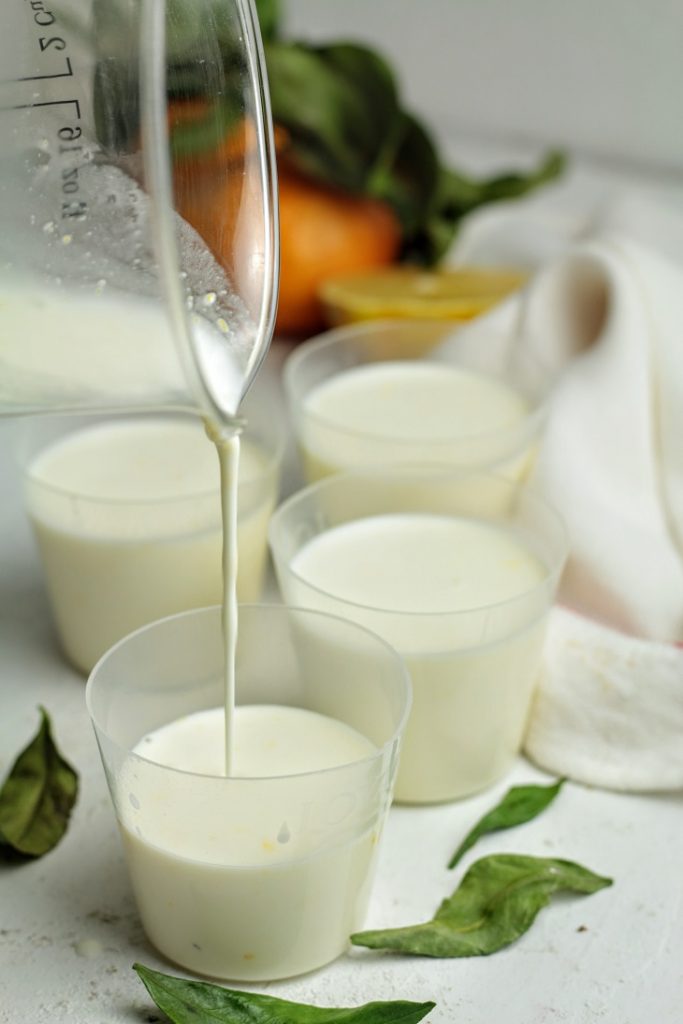
Pour into the prepared containers. Do not fill to the brim. Leave some space to avoid spillage. Also the gap helps in releasing later.
These ramekins will hold the same amount (4oz) as the ones I'm using above.
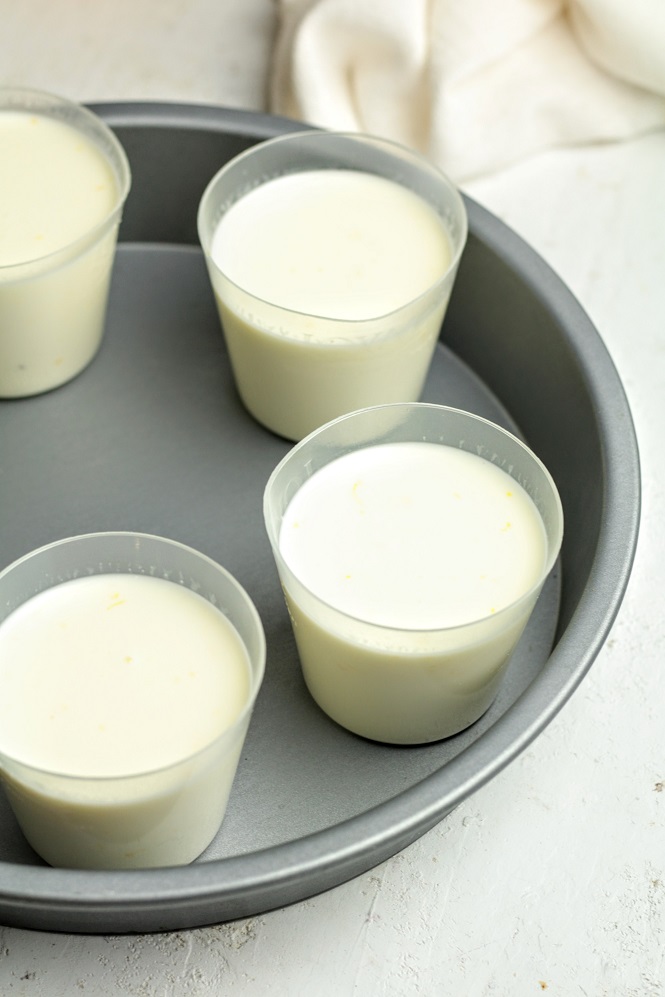
This a tip: place all the molds on a tray and then refrigerate. This is a good way to make sure they are leveled and also to avoid accidents inside the fridge.
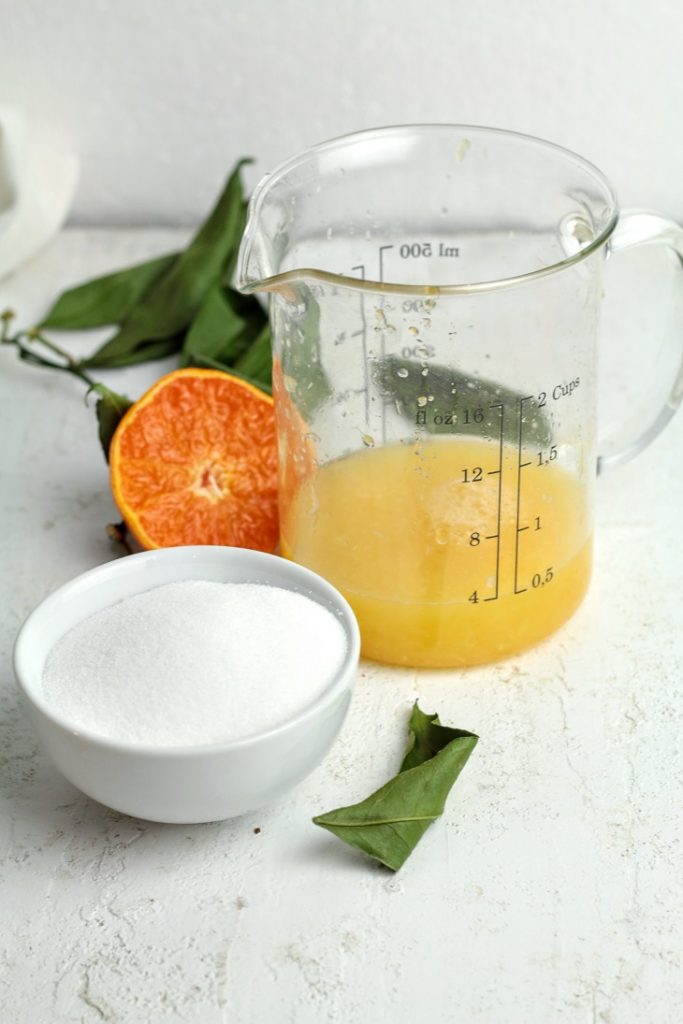
While panna cotta are setting, make the syrup. This can be made ahead too. Anyway the syrup need to cool completely before going on the panna cotta.
All you need is 1 part Orange and Mandarin juice and 1 part sugar. I prefer to leave the pulp in. If you want you can strain it too.
Add some Orange or Mandarin zest.
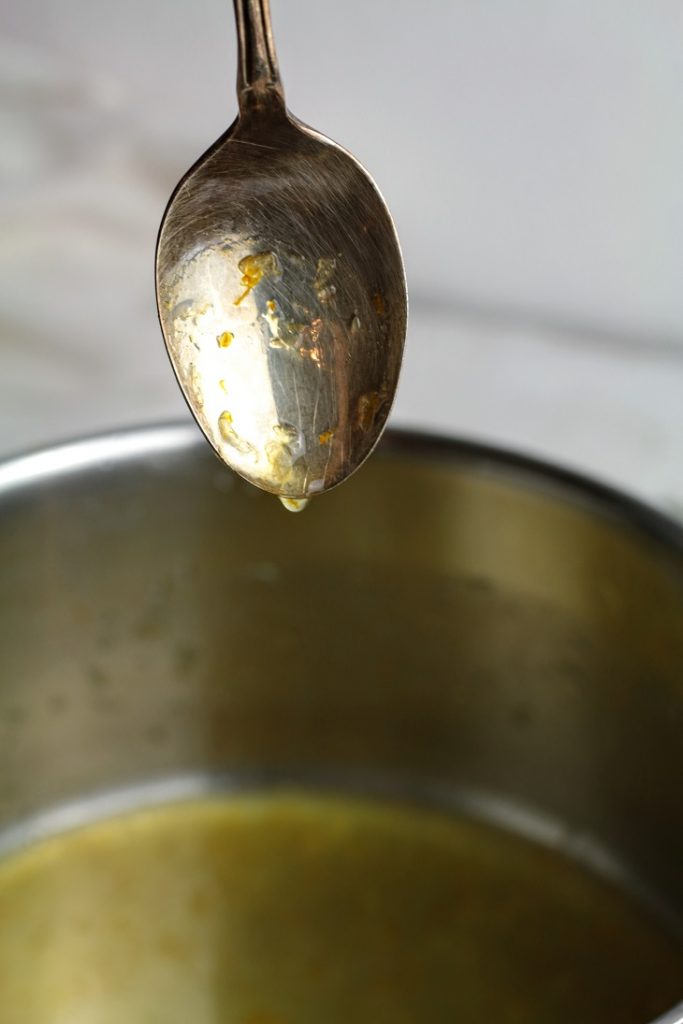
Place everything in a saucepan, stir and bring to a boil. Make sure all the sugar is dissolved. Boil for about 30 seconds and then reduce heat and simmer for 2-3 minutes or until the syrup just starts to thicken.
Lift the spoon and observe. The last drop should cling to the spoon for some time before slowly dripping back into the saucepan.
If you reduce too much, the syrup will go too thick as it cools. If that happens, add a little OJ and reheat to dilute.
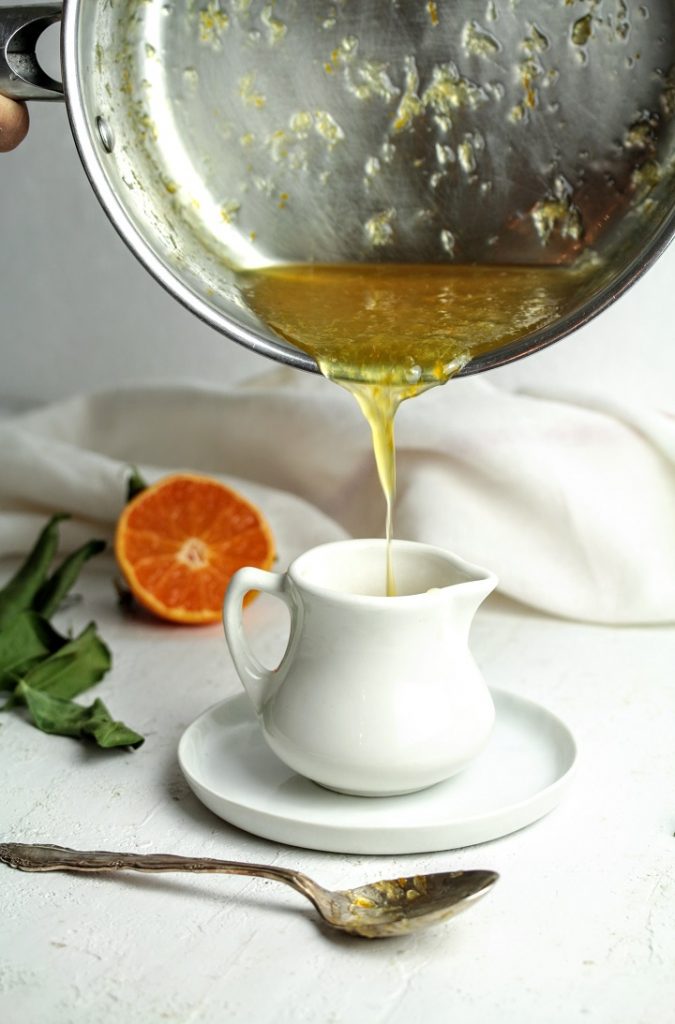
Pour the cooled syrup in a poring jug and set aside until serving time.
You can store the syrup at room temperature. Make sure to cover tightly.
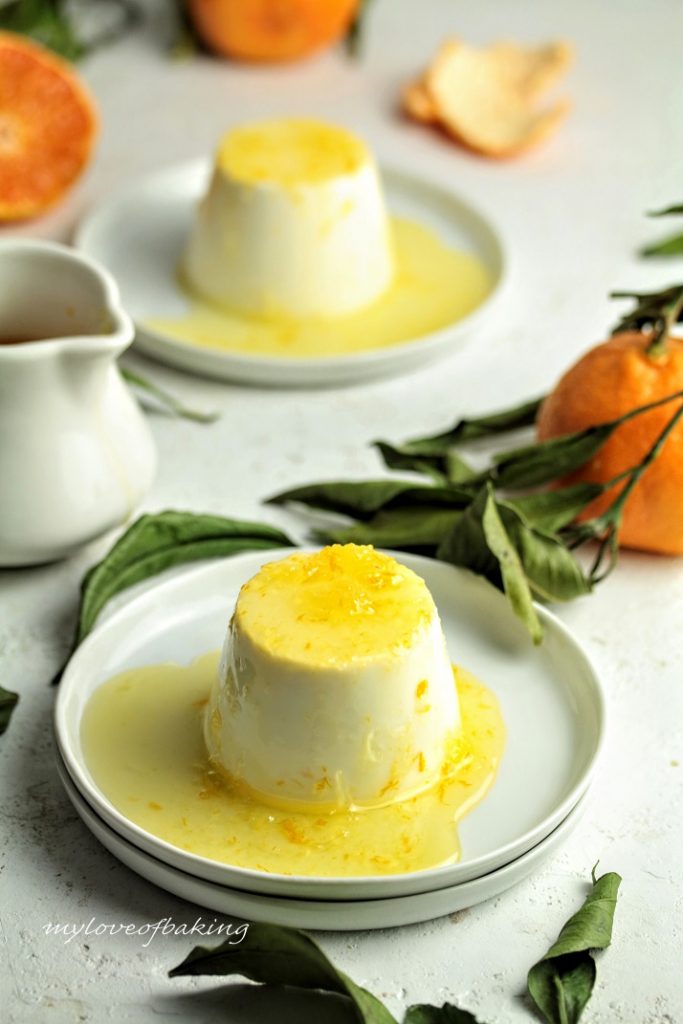
Once the panna cotta are set, invert them on to serving platters. You can demold and let them sit in the fridge too.
Use a pairing knife or an offset spatula to help release. Check the video
Shop the Ingredients


Orange Panna Cotta With Orange & Mandarin Syrup
Ingredients
Method
To make the panna cotta
- 1
Place cream, milk with zest in a saucepan and place on medium heat
- 2
Add the sugar and cook stirring until the mixture comes to a boil. Make sure all the sugar is dissolved
- 3
While the cream cooks, bloom the gelatin (check post above for blooming instructions for powdered vs sheets)
- 4
Once the cream and milk mixture, comes to a boil, remove from heat and add the bloomed gelatin straight into the hot mixture
- 5
Make sure to squeeze out most of the water from bloomed gelatin sheets
- 6
Stir well until all the gelatin is dissolved (won't take long)
- 7
You can either strain this or leave the zest in. Pour the mixture into a jug for easy distribution
- 8
Prepare molds by lightly greasing them (check post above for more details) if you plan on inverting. If you are going to set straight in the serving glasses/ramekins, don't worry about greasing
- 9
Evenly distribute the mixture among the molds or the serving glasses
- 10
Place them on a tray and refrigerate to set. Minimum 5-6 hours but longer is recommended
To make the Syrup
- 11
Simply place juice and sugar (along with zest and star anise if using) in a saucepan and bring to a boil string to make sure all the sugar is dissolved
- 12
Boils for about 30 seconds and then reduce heat and simmer for about 2-3 minutes until the syrup starts to thicken
- 13
Check the post above on how to know if the syrup has thickened
- 14
Take off the heat and leave to cool. The syrup will thicken further as it cools
- 15
If it sets too thick, add a little orange juice and reheat while stirring, to dilute
- 16
Leave the syrup to fully cool before using
- 17
serving
- 18
Unmold the panna cotta onto a platter and drizzle with cooled syrup
- 19
If serving in the same container, just pour the syrup on top or serve on the side
Notes
You can demold the panna cotta ahead of time and leave them in the fridge until serving time. Slide a offset spatula/knife underneath and lift panna cotta if you want to move/rearrange it after demolding. Multiply (double, quadruple etc.) this recipe to serve a larger crowd
Never Miss a Recipe
Get new recipes straight to your inbox.

You might also like


Comments
Loading comments…